If you’ve been told to swap your standard air filter for a MERV 13 to catch more dust, pollen, or even smoke, you might be wondering: Will a MERV 13 damage my AC? It’s a smart question. A lot of people hear "higher efficiency" and assume it’s always better. But in real-world home systems, that’s not always true.
What Does MERV 13 Even Mean?
MERV stands for Minimum Efficiency Reporting Value. It’s a scale from 1 to 16 that tells you how well a filter traps tiny particles. A MERV 8 filter catches things like pollen and dust mites. A MERV 13? It traps bacteria, smoke, and even some virus particles. That sounds great - until you realize your HVAC system wasn’t designed for it.
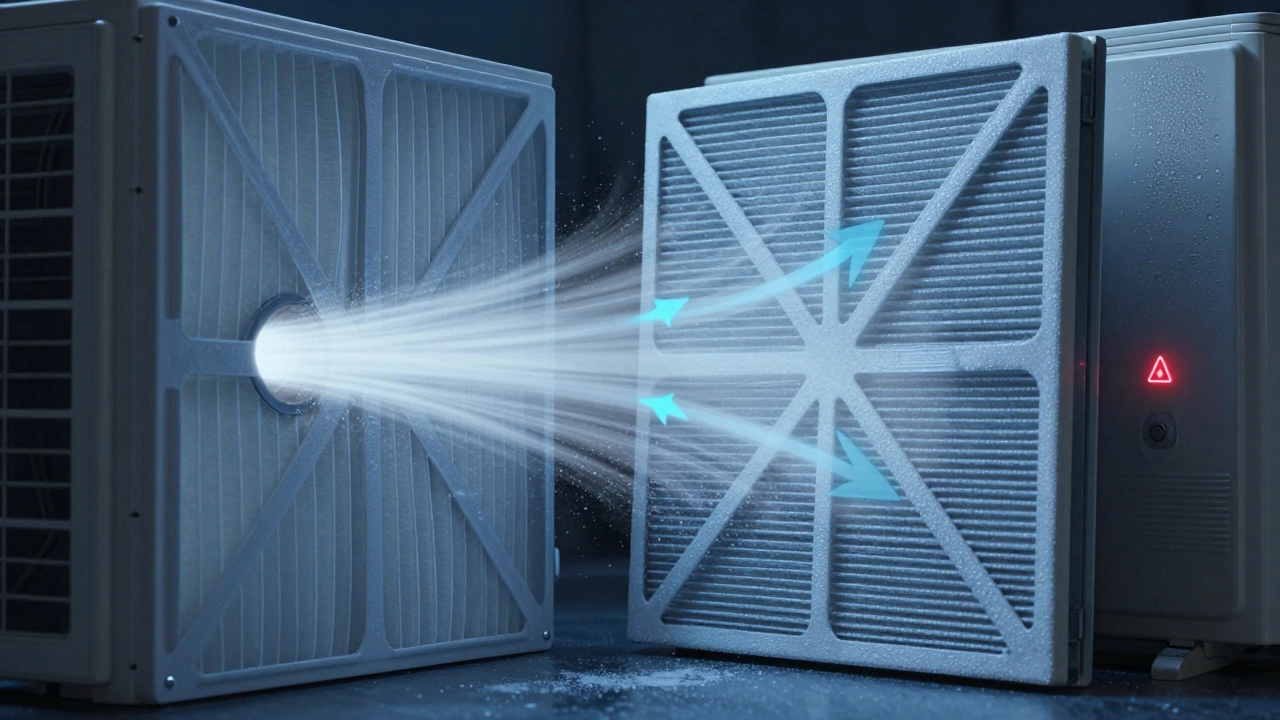
Think of it like this: a MERV 13 filter is like a fine-mesh sieve. It holds back more junk, but that also means air has a harder time flowing through it. Your AC’s blower motor has to work harder to push air past that resistance. If your system was built for a MERV 8 or MERV 11, forcing it to handle MERV 13 can cause real stress.
How Your AC Was Designed Matters
Most homes built before 2015 have HVAC systems designed for MERV 8-11 filters. That’s because manufacturers assumed standard airflow. Modern high-efficiency systems - especially those with variable-speed blowers - can handle MERV 13 just fine. But older units? They’re not built for it.
If your AC unit is over 10 years old, has a single-speed blower, or you’ve ever noticed it running louder than usual, you’re likely at risk. A MERV 13 filter can restrict airflow so much that the blower motor overheats. That’s not a myth. In 2023, the Air-Conditioning, Heating, and Refrigeration Institute (AHRI) reported a 27% spike in blower motor failures in homes that switched to MERV 13 without checking system compatibility.
Signs Your AC Is Struggling
You don’t need a technician to tell you if your filter is causing problems. Watch for these red flags:
- Your home takes longer to cool down, even when the thermostat is set low
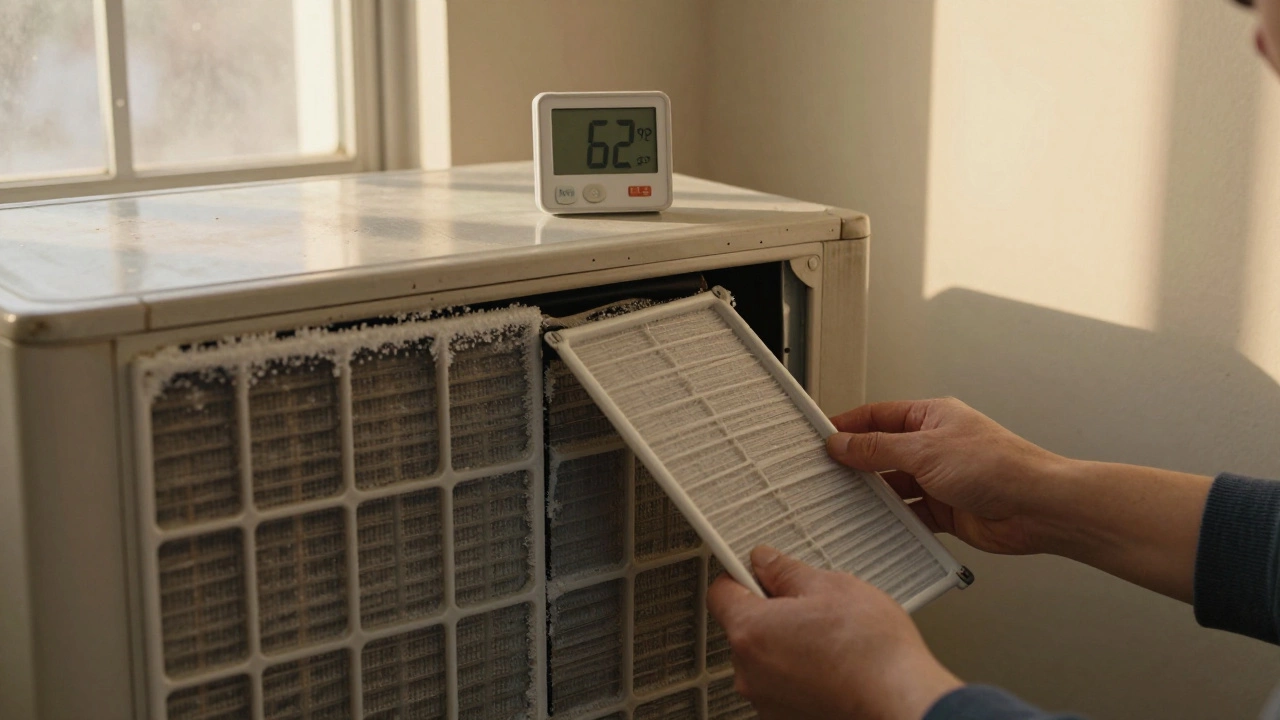
- Ice forms on the evaporator coil (that’s the indoor part of your AC)
- The blower motor sounds louder or clicks off unexpectedly
- Your energy bills jump without any change in usage
- You notice more dust on surfaces despite having a new filter
Ice on the coil? That’s a classic sign of low airflow. When air can’t move past the filter, the coil gets too cold and freezes. That doesn’t just hurt efficiency - it can crack the coil and cost you $1,200 to replace.
What Happens If You Keep Using MERV 13 Anyway?
Some people think, "I’ll just change the filter more often." That helps - but it doesn’t fix the core issue. A MERV 13 filter doesn’t get clogged faster because it’s dirty. It gets clogged faster because it’s designed to catch more stuff. Even a clean MERV 13 creates more resistance than a MERV 8.
Over time, the strain on your blower motor wears it down. The capacitor that helps start the motor can burn out. The ductwork can develop leaks from pressure changes. And if you’re lucky, you’ll just pay more on your electricity bill. If you’re unlucky, you’ll end up with a dead blower motor in the middle of summer.
So Should You Use MERV 13?
It’s not a simple yes or no. Here’s how to decide:
- Check your owner’s manual. If it says "use MERV 8-11," stick to it.
- Look at your filter slot. If the frame is thin and flimsy, your system probably can’t handle the extra resistance.
- Ask your HVAC tech. During your next service, ask if your blower motor is rated for high-static pressure. If they hesitate, that’s a red flag.
- Test airflow. Hold a tissue near a vent. If it doesn’t flutter when the AC runs, airflow is too weak.
If your system is newer (built after 2018) and has a variable-speed blower, MERV 13 is usually safe. Many modern systems even come with MERV 13 as the default. But if you’re not sure? Go with MERV 11. It still catches most allergens, smoke, and fine dust - without the risk.
What’s the Best Alternative?
MERV 11 is the sweet spot for most homes. It captures 85% of particles between 1 and 3 microns - that includes mold spores, pet dander, and fine dust. It’s not as good as MERV 13 for viruses, but it’s close enough for most households. And it doesn’t choke your system.
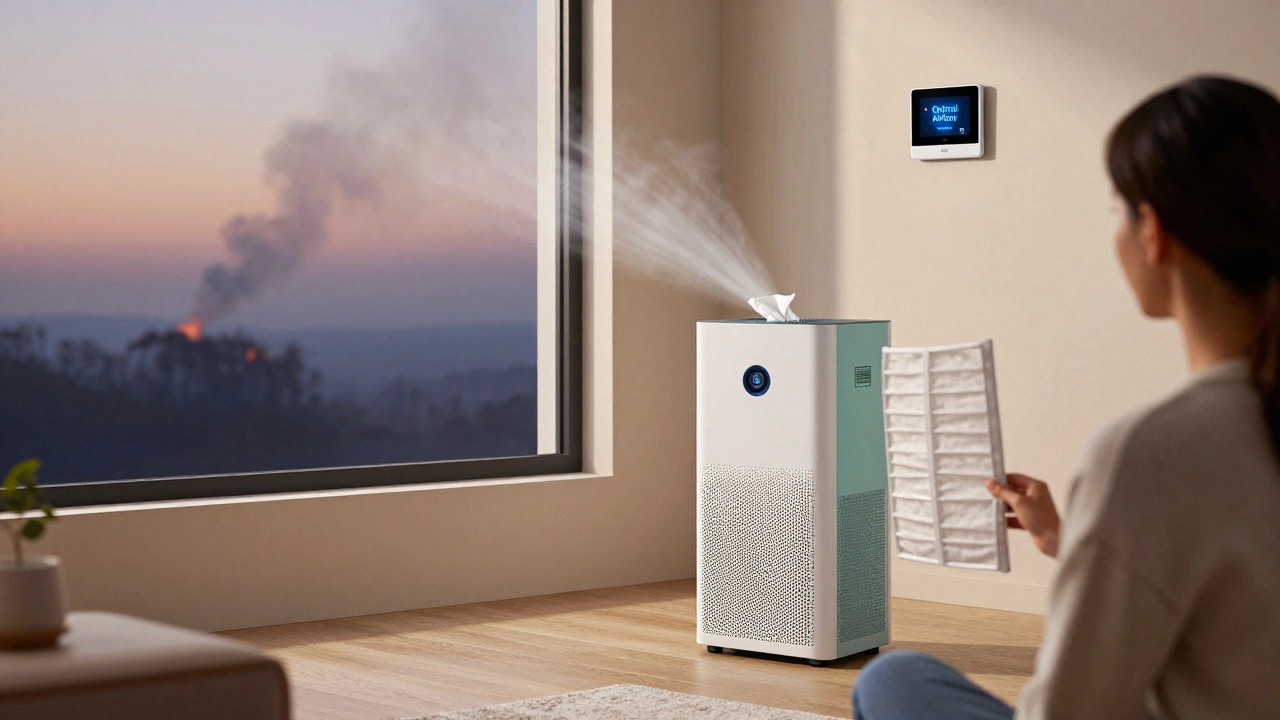
If you’re worried about smoke or allergens, consider a hybrid solution: use a MERV 11 filter and add a standalone air purifier in your bedroom or living room. That way, you get the air quality boost without overloading your HVAC.
Real-World Example: Adelaide Home
In Adelaide, where bushfire smoke is common in late summer, many homeowners upgraded to MERV 13 after the 2020 fires. But by 2023, local HVAC repair shops reported a 40% increase in blower motor replacements in homes that made the switch. One customer, a retired teacher in Norwood, switched to MERV 13 in 2022. Her AC started icing up in January 2023. She replaced the filter monthly - still no luck. The fix? Swap back to MERV 11, clean the ducts, and install a portable HEPA purifier. Her bills dropped 18%, and the system hasn’t failed since.
Final Answer: Will a MERV 13 Damage My AC?
Yes - if your system wasn’t built for it. MERV 13 isn’t inherently bad. But forcing it into an older or undersized system is like putting racing tires on a sedan. It might look good, but it’ll wear out the suspension.
Stick with MERV 11 unless you’ve confirmed your HVAC can handle the extra load. If you’re unsure, don’t guess. Call a pro. A $100 service call now saves you $1,000 in repairs later.
Can I use a MERV 13 filter if I change it every month?
Changing the filter more often doesn’t solve the problem. A MERV 13 filter restricts airflow even when it’s clean. The issue isn’t how dirty it gets - it’s how hard it is for air to pass through. If your system can’t handle the resistance, frequent changes won’t help.
Is MERV 13 better for allergies?
Yes, MERV 13 captures more allergens than lower-rated filters - including pollen, mold spores, and fine dust. But MERV 11 captures 85% of the same particles. For most people, the difference isn’t noticeable. If allergies are severe, a standalone HEPA air purifier in your bedroom is more effective and won’t strain your HVAC.
What happens if I use a MERV 13 filter for too long?
If you leave a MERV 13 filter in too long, airflow drops even further. That increases strain on your blower motor, raises energy bills, and can cause the evaporator coil to freeze. In extreme cases, it can lead to motor burnout or duct leaks. Don’t wait until it’s clogged - replace it every 2-3 months, or as your system’s manual recommends.
Do all AC units handle MERV 13 the same way?
No. Systems with variable-speed blowers and modern duct designs can handle MERV 13 just fine. Older units with single-speed motors and narrow ducts often can’t. Check your system’s manual or ask an HVAC technician to test static pressure. That’s the only reliable way to know.
Should I upgrade my AC to use MERV 13?
If you’re considering a new HVAC system, yes - modern units are designed for MERV 13. But upgrading just to use a better filter isn’t cost-effective. The savings from better air quality won’t offset the cost of a new system. Instead, use MERV 11 and add a portable air purifier where you spend the most time.