Alloy vs. Steel Wheel Comparison Tool
Enter Your Vehicle Specs
Analysis Results
-
Total Upgrade Cost $0
-
Total Weight Reduction 0 lbs
-
Est. Fuel Savings (Yearly) $0
Verdict
Adjust the sliders to see the comparison.
There is a reason why almost every modern car rolls off the assembly line with alloy rims instead of heavy steel buckets. They look sharper, they handle better, and they help your fuel economy just a little bit more. But if you are standing in a tire shop looking at price tags that double or triple compared to basic steelies, you might be wondering: are they actually worth the extra cash?
The short answer is yes, but only if you understand what you are paying for. You aren't just buying shiny metal; you are buying reduced unsprung weight, better heat dissipation, and a specific aesthetic. However, there are trade-offs. Alloy wheels can crack under severe impact, they cost more to repair, and they require more maintenance to keep looking new. Let’s break down exactly how they work, how they compare to steel, and whether you should swap your current setup.
What Exactly Are Alloy Wheels?
When people say "alloy," they usually mean an aluminum-based mix. Pure aluminum is too soft to hold the structural integrity needed for a wheel that supports thousands of kilograms while hitting potholes. So manufacturers add small amounts of other metals-typically magnesium, silicon, copper, or zinc-to create a material that is stronger and lighter than pure aluminum, yet still significantly lighter than steel.
Aluminum alloy wheels are typically cast or forged. Casting involves pouring molten metal into a mold, which is cheaper but results in a heavier, slightly weaker wheel. Forging involves hammering the metal under extreme pressure, creating a denser grain structure. This makes forged wheels incredibly strong and light, but also much more expensive. Most everyday cars use cast alloys because they hit the sweet spot between cost, weight, and strength.
The Big Advantage: Unsprung Weight
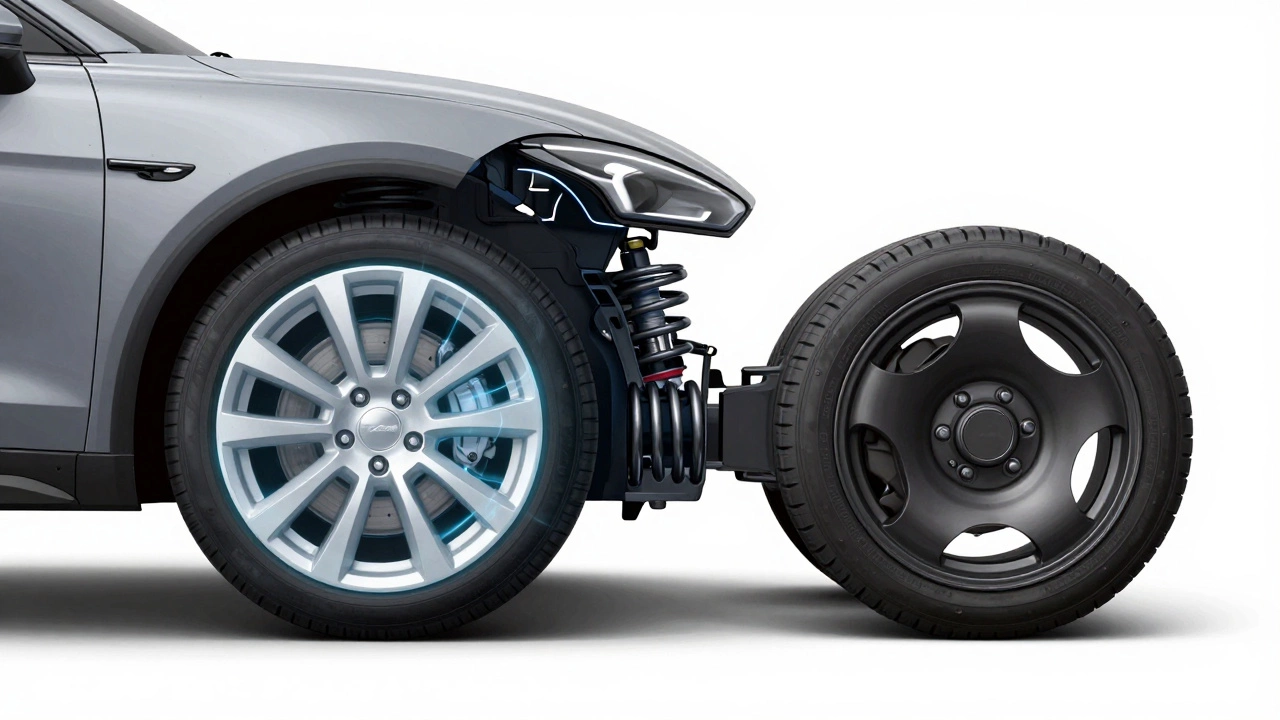
If you take away one thing from this article, let it be this concept: unsprung weight. In automotive engineering, unsprung weight refers to parts of the vehicle not supported by the suspension-wheels, tires, brakes, and half the axle. The rest of the car body is "sprung" weight, sitting on top of the shocks and springs.
Why does this matter? Physics. Every time your wheel hits a bump, the suspension has to absorb that energy. If the wheel itself is heavy (like a steel rim), it takes more energy to move it up and down. This makes the ride feel harsher because the suspension is working harder just to control the wheel's mass. By switching to alloy rims, which can be 30% to 50% lighter than equivalent steel wheels, you reduce that unsprung weight.
The result? Better handling. The tires stay in contact with the road longer over bumps, giving you more grip in corners. You also get quicker acceleration and braking because the engine doesn't have to spin as much rotational mass. It’s like running in heavy boots versus lightweight sneakers. The difference feels subtle until you try both.
Heat Dissipation and Braking Performance
Steel is great at conducting electricity, but it isn’t the best at moving heat away quickly. Aluminum, on the other hand, is an excellent thermal conductor. When you brake, friction generates immense heat in the brake discs and calipers. If that heat stays trapped near the brakes, it can lead to brake fade-a scary situation where your brakes stop working effectively because they are overheated.
Alloy wheels act like giant heat sinks. Their spokes allow air to flow through to the brakes, and the metal itself draws heat away from the brake components faster than solid steel drums can. For daily driving, this difference is negligible. But if you drive in hilly areas, tow frequently, or enjoy spirited driving, alloy rims help keep your braking system cooler and more consistent.
Aesthetics and Customization
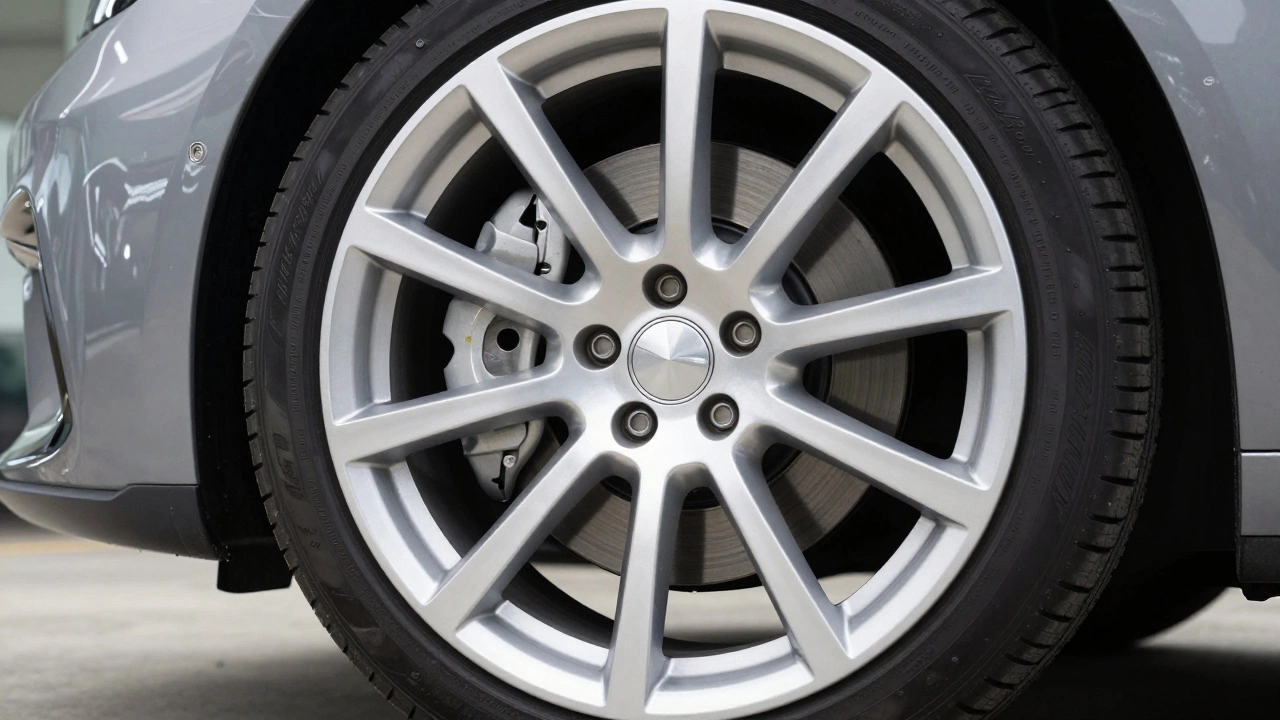
Let’s be honest: looks matter. Steel wheels are usually covered by cheap plastic hubcaps that scratch, crack, and fall off within a year. They look utilitarian, plain, and frankly, a bit sad. Alloy rims come in thousands of designs. You can get multi-spoke classics, aggressive mesh patterns, or sleek five-spoke sport styles. They can be painted silver, black, bronze, or even wrapped in carbon fiber.
Because alloy wheels are manufactured using molds, designers have total freedom over the shape. This allows for precise fitments that maximize the space inside the wheel well without rubbing against the fenders. If you want your car to look finished and purposeful, alloy wheels are the standard way to achieve that.
The Downsides: Durability and Cost
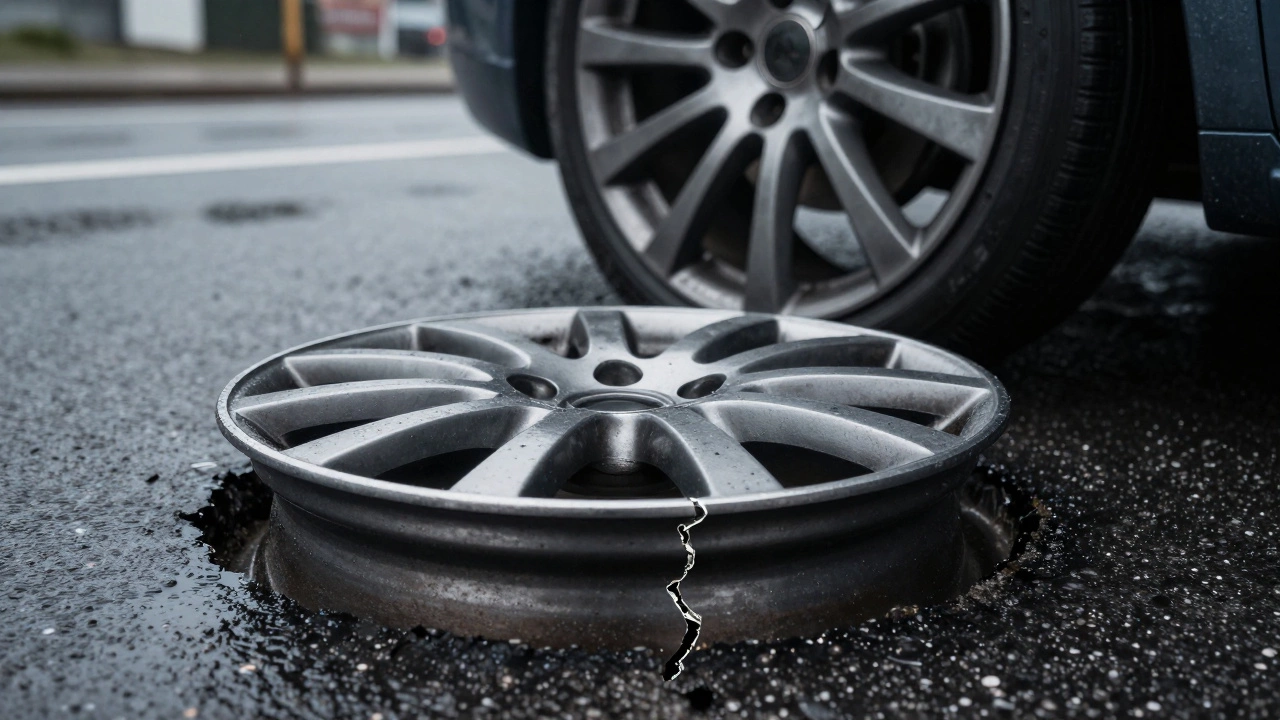
So far, alloy wheels sound perfect. But they have weaknesses. The first is brittleness. Steel is ductile, meaning it bends when it hits something hard. An alloy wheel is rigid. If you hit a deep pothole or a curb at speed, a steel wheel might bend out of shape, which a professional can often straighten. An alloy wheel, however, will likely crack or shatter. Cracks compromise the structural integrity of the wheel, meaning it usually needs to be replaced entirely rather than repaired.
Secondly, there is corrosion. While aluminum doesn't rust like iron, it does oxidize. Over time, especially in coastal areas or places that use road salt in winter, alloy wheels can develop surface oxidation. This looks like white, chalky spots on the finish. It’s mostly cosmetic, but it requires polishing or refinishing to fix. Steel wheels, meanwhile, are often coated with durable paint or rubber that resists these elements better, provided the coating isn't chipped.
Finally, the price. A set of four decent alloy wheels can cost anywhere from $400 to $1,500 or more, depending on size and brand. Steel wheels are often sold for under $100 per corner. If you live in an area with terrible roads full of potholes, the higher replacement cost of alloys might make you hesitate.
Alloy vs. Steel: A Direct Comparison
| Feature | Alloy Wheels | Steel Wheels |
|---|---|---|
| Weight | Light (reduces unsprung weight) | Heavy (increases unsprung weight) |
| Handling | Better responsiveness and grip | Slightly sluggish response |
| Durability | Can crack on impact | Bends but rarely breaks; easily repaired |
| Heat Management | Excellent cooling for brakes | Poor heat dissipation |
| Cost | Higher ($100-$500+ per wheel) | Lower ($50-$150 per wheel) |
| Maintenance | Requires cleaning to prevent oxidation | Low maintenance; prone to rust if painted |
| Fuel Economy | Slight improvement due to lower weight | No benefit; slight drag from weight |
Who Should Stick with Steel?
Not everyone needs alloy wheels. If you run a fleet of delivery vans, plow snow in winter, or drive primarily on unpaved rural tracks, steel wheels are superior. They are tough, cheap to replace, and easy to balance. Mechanics love them because they are simple to work with. If your priority is pure utility and lowest possible operating cost, steel is the logical choice. Many people buy steel wheels for their winter tire setups to save money and protect their nicer summer alloys from road salt.
How to Maintain Alloy Wheels
If you decide to go with alloys, you need to care for them. Brake dust contains metallic particles that bond to the wheel surface. If left alone, this dust eats into the clear coat, causing permanent staining. Wash your wheels regularly with a pH-neutral soap. Avoid using harsh acidic cleaners unless necessary, as they can strip the protective layer. If you notice curb rash (scratches from hitting curbs), you can sand and polish minor scuffs yourself, but deep cracks must be inspected by a professional immediately.
Final Verdict
Are alloy rims good? Yes, for the vast majority of drivers. They improve your car’s dynamics, look significantly better, and offer tangible benefits in braking and efficiency. The higher upfront cost is offset by the improved driving experience and the longevity of the wheel design. Just be mindful of your local road conditions. If you live in a city with smooth streets, alloys are a no-brainer. If you navigate construction zones daily, consider reinforced alloys or keeping steel spares handy.
Do alloy wheels really improve fuel economy?
Yes, but the effect is modest. Because alloy wheels are lighter, the engine uses less energy to accelerate the rotating mass. This reduction in unsprung weight can improve fuel efficiency by approximately 1-3%, depending on the weight difference and driving style. It won't turn a gas-guzzler into a hybrid, but it helps.
Can I repair a cracked alloy wheel?
Minor cracks can sometimes be welded and machined back to shape by a specialist, but this is risky. Structural integrity is compromised once a crack forms. Most experts recommend replacing cracked alloy wheels rather than repairing them, especially for cracks near the rim edge or center bore. Bends and scratches, however, are easily repairable.
Why do my alloy wheels look cloudy or dull?
This is likely oxidation or brake dust buildup. Aluminum reacts with oxygen and moisture over time, creating a white, chalky film. Regular washing removes loose dirt, but established oxidation may require a specialized alloy wheel cleaner or polishing compound to restore the shine. Applying a sealant after cleaning can slow down future oxidation.
Are forged wheels better than cast alloy wheels?
Forged wheels are stronger and lighter than cast wheels because the metal grains are compressed during manufacturing. This makes them ideal for high-performance vehicles and track use. However, they are significantly more expensive. For daily street driving, high-quality cast alloy wheels offer sufficient strength and durability at a fraction of the cost.
Should I use alloy wheels for winter tires?
It depends on your climate. If you live in an area with heavy road salt, steel wheels are often preferred for winter sets because they are cheaper to replace if corroded or damaged. However, many drivers now use dedicated winter alloy wheels to maintain better handling and aesthetics. If you choose alloys for winter, ensure they are properly sealed and cleaned regularly to prevent salt damage.