Engine Oil Change Interval Calculator
Your Recommendation
Select your options and click calculate to see when you should change your oil.
Your car’s dashboard light isn’t blinking yet. You’ve only driven 4,500 miles since the last service. But is that enough? For decades, we were told to change our engine oil every 3,000 miles. That rule is dead. Sticking to it today wastes money and hurts the environment. Ignoring modern guidelines, however, risks expensive engine damage. So, what is the actual number?
The answer depends on three things: the type of oil in your tank, how you drive, and what your car’s computer says. In 2026, most modern vehicles can safely go between 7,500 and 10,000 miles between changes if they use full synthetic oil. Some even stretch to 15,000 miles. But if you are driving a taxi in stop-and-go traffic or towing a boat up a mountain, those numbers drop significantly.
The Death of the 3,000-Mile Rule
Where did the 3,000-mile myth come from? It originated in the 1980s when engines were less precise and oil technology was primitive. Back then, conventional mineral oil broke down quickly under heat and friction. Car manufacturers needed a safe, conservative buffer to prevent warranty claims.
Today, engineering has changed. Modern engines have tighter tolerances, better seals, and more efficient combustion chambers. More importantly, the oil itself is different. Full synthetic oils are engineered at a molecular level to resist breakdown. They handle extreme temperatures far better than their predecessors. Because of this shift, major automakers like Toyota, Honda, and Ford now recommend intervals of 5,000 to 10,000 miles for normal driving conditions.
If you still change your oil every 3,000 miles out of habit, you are likely throwing away perfectly good fluid. Synthetic oil retains its protective properties well beyond that mark. However, understanding why the old rule existed helps us understand why context matters today. The engine doesn't care about mileage alone; it cares about stress.
Synthetic vs. Conventional: Why Type Matters
The single biggest factor in determining your change interval is the viscosity and composition of the oil. There are three main categories you will encounter at the pump or the shop:
- Conventional Oil: Derived directly from crude oil. It works fine for older cars or simple engines but breaks down faster due to impurities. Recommended interval: 3,000-5,000 miles.
- Synthetic Blend: A mix of conventional and synthetic. It offers better protection than pure conventional oil but doesn't reach the longevity of full synthetic. Recommended interval: 5,000-7,500 miles.
- Full Synthetic: Chemically engineered for purity and stability. It flows better in cold starts and resists sludge formation. Recommended interval: 7,500-10,000+ miles.
In 2026, almost all new cars come filled with full synthetic oil from the factory. If you own a vehicle made after 2015, switching back to conventional oil is usually a step backward. Stick to the specification listed in your owner's manual (often labeled as API SP or ILSAC GF-6 standards). Using the wrong type can void warranties and reduce fuel economy by up to 2%.
Severe Driving Conditions: When Mileage Lies
Mileage is just one part of the equation. Your driving style dictates how hard your engine works. Manufacturers distinguish between "normal" and "severe" service schedules. Severe doesn't mean you are racing on a track; it means your engine is under constant strain.
You fall into the severe category if you do any of the following regularly:
- Drive mostly short trips under 5 miles (the engine never reaches optimal operating temperature).
- Tow heavy loads or carry roof racks with cargo.
- Drive in extreme heat (above 95°F) or extreme cold (below 0°F).
- Navigate heavy city traffic with frequent idling and stop-and-go movement.
- Drive on dusty, unpaved roads.
Under these conditions, contaminants build up faster. Short trips are particularly damaging because moisture and fuel dilute the oil before it can burn off. If you live in this reality, cut your recommended interval in half. If your manual says 10,000 miles, change it at 5,000. This isn't about fear-mongering; it's about physics. Heat and shear forces degrade additives quicker when the engine is stressed.
Trust the Oil Life Monitor
Most cars built in the last decade feature an Oil Life Monitor system. This isn't a random timer. It uses algorithms based on engine revolutions, coolant temperature, intake air temperature, and ambient conditions to calculate exactly how much life is left in your oil.
When the display reads "Oil Life 15%," your car is telling you that the chemical additives in the oil are nearing depletion. Ignore the odometer. Trust the sensor. These systems are calibrated by engineers who know your specific engine's needs better than any general guideline.
However, there is a catch. If you reset the monitor incorrectly after a change, or if the sensor fails (rare, but possible), you lose this safety net. Always reset the monitor immediately after an oil change. If your car lacks this feature-common in older models-you must rely on time and mileage estimates.
The Time Factor: Even Parked Cars Need Care
What if you barely drive? Maybe you commute two days a week and leave the car sitting for months. Does the oil last forever? No. Oil degrades over time regardless of mileage. Moisture condenses inside the crankcase when the engine cools down. Acids form as the oil oxidizes. Even in a sealed container, oil has a shelf life.
The general rule for low-mileage drivers is to change the oil at least once a year. If you drive less than 3,000 miles annually, do not wait two years. The sealants in the engine can dry out, and the acidic sludge formed by old oil can corrode internal components. One annual change keeps the engine fresh and protects against rust.
Comparison: Intervals by Scenario
| Driver Profile | Oil Type | Mileage Interval | Time Interval |
|---|---|---|---|
| Average Commuter | Full Synthetic | 7,500 - 10,000 miles | 6 - 12 months |
| City/Traffic Heavy | Full Synthetic | 5,000 - 7,500 miles | 6 months |
| Older Vehicle (Pre-2010) | Conventional/Blend | 3,000 - 5,000 miles | 6 months |
| Low Mileage (<3k/yr) | Any | N/A | Every 12 months |
| Towing/Heavy Load | Full Synthetic | 3,000 - 5,000 miles | 3 - 6 months |
Signs Your Oil Needs Changing Now
Sometimes, you don't need a calculator. Your car will tell you something is wrong. Watch for these physical signs:
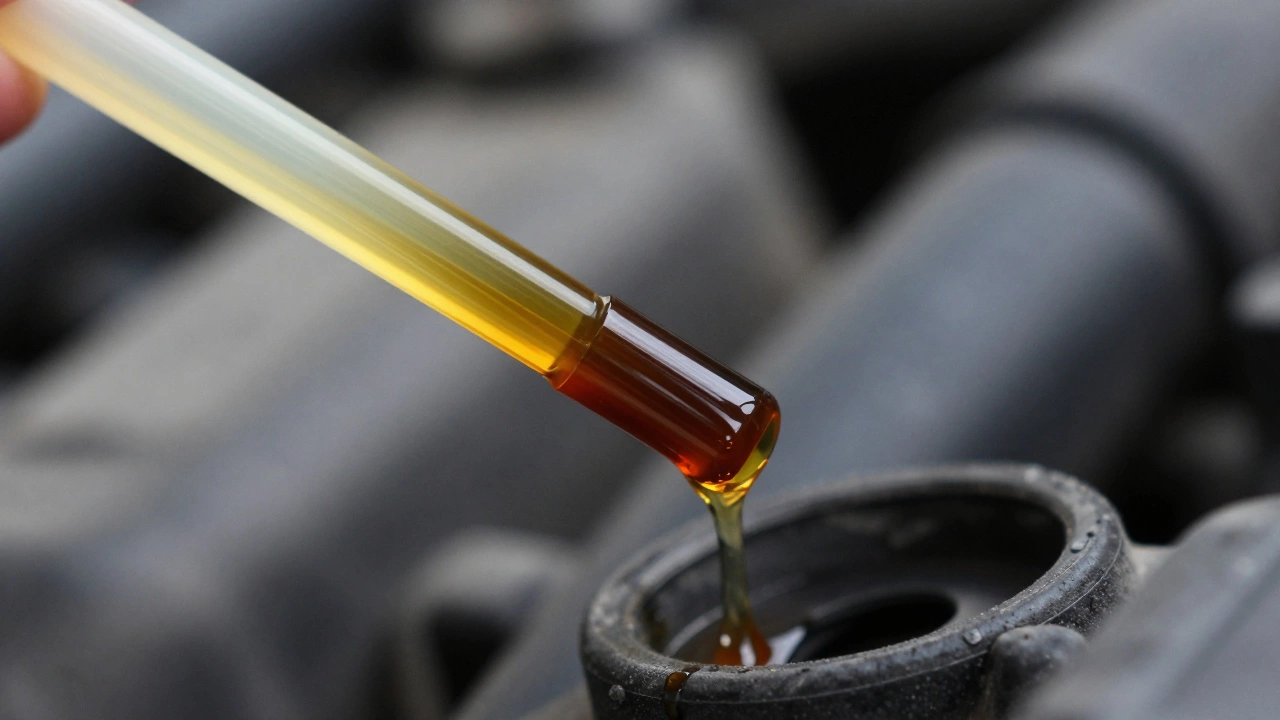
- Dark, Gritty Oil: Pull the dipstick. Fresh oil is amber and translucent. Used oil turns black. While dark oil isn't always bad (detergents hold dirt in suspension), if it feels gritty or smells like burnt toast, change it immediately.
- Engine Noise: Knocking or ticking sounds often indicate low oil pressure or thickened oil that isn't lubricating properly.
- Exhaust Smoke: Blue or gray smoke from the tailpipe suggests oil is burning in the combustion chamber, meaning levels are low or seals are failing.
- Check Engine Light: While this can mean many things, some modern sensors trigger warnings specifically for oil pressure or quality issues.
Don't wait for the warning light. By the time the light comes on, significant wear may have already occurred. Regular inspection of the dipstick takes ten seconds and can save thousands in repair bills.
DIY vs. Professional Service
Can you do it yourself? Absolutely. An oil change is one of the easiest DIY tasks. You need a wrench, a drain pan, a funnel, and the correct filter. The cost savings are real: a DIY change might cost $30-$50, while a quick-lube shop charges $60-$100.
However, consider the disposal. You cannot throw used oil in the trash. It must be taken to a recycling center or auto parts store. If you lack the space or desire to handle hazardous waste, professional services are worth the premium for convenience and proper disposal. Also, shops often include multi-point inspections (brakes, tires, fluids) that catch other potential issues early.
Is it bad to wait longer than recommended to change oil?
Yes. Over time, oil loses its ability to lubricate and cool engine parts. Sludge builds up, leading to increased friction, overheating, and eventual engine failure. Extending intervals beyond manufacturer recommendations risks costly repairs that far exceed the cost of regular maintenance.
Does changing oil more often hurt the engine?
No. Changing oil more frequently than necessary does not harm the engine. It simply costs you more money and generates more waste. However, keeping the oil clean ensures maximum performance and longevity, so there is no mechanical downside to being proactive.
How do I know if my car uses synthetic or conventional oil?
Check your owner's manual or look at the bottle of oil currently in your car. Most vehicles manufactured after 2015 require full synthetic oil. If your manual specifies API SN Plus or later standards, it is likely designed for synthetic formulations. When in doubt, ask a mechanic or check the oil cap label.
Should I change my oil if I drive very little?
Yes. Even if you drive less than 1,000 miles a year, you should change your oil at least once a year. Oil degrades due to oxidation and moisture accumulation, not just mileage. Annual changes prevent acid buildup and protect engine seals from drying out.
What happens if I top off oil instead of changing it?
Topping off adds volume but does not remove contaminants. Old oil contains metal shavings, carbon deposits, and degraded additives. Without a full drain and refill, these harmful particles continue to circulate, causing abrasion and wear. Topping off is a temporary fix for leaks, not a maintenance strategy.