Wiper Blade Fitment Checker
Select your vehicle type to see the recommended action when considering an upgrade from standard 22" to larger 24" wiper blades.
Recommendation:
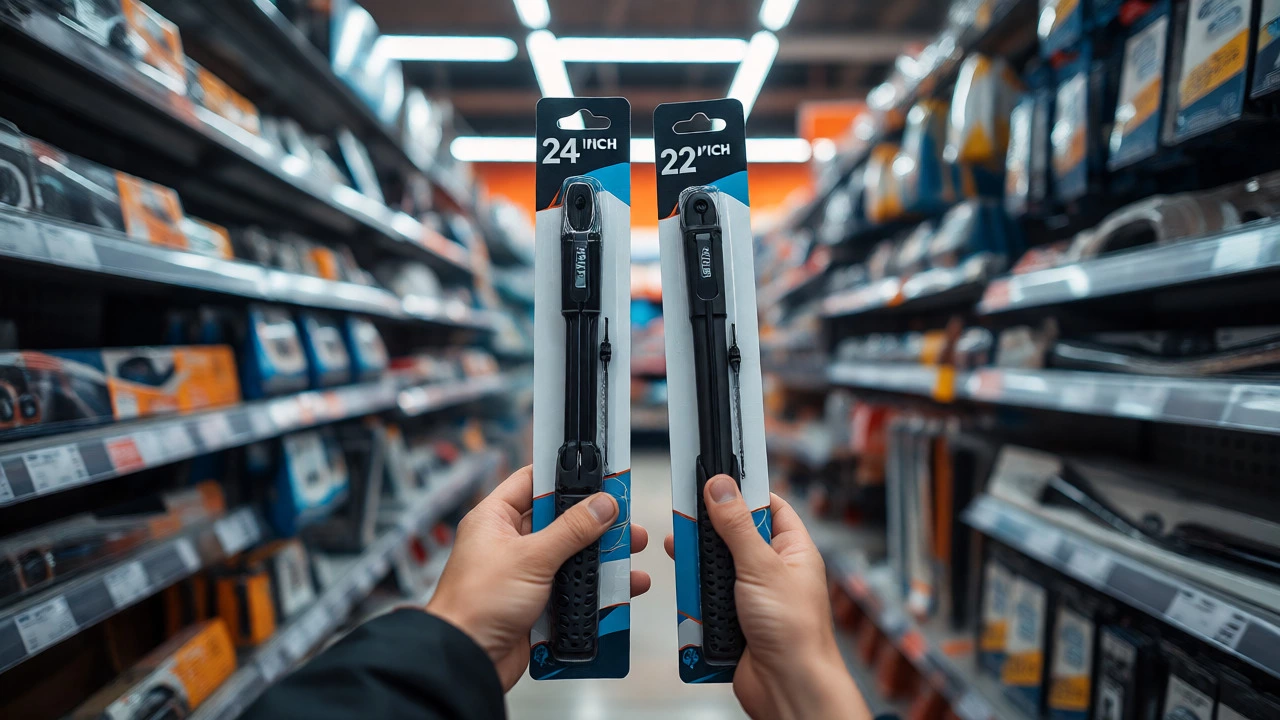
You’re standing in the auto parts aisle, holding a shiny new wiper blade that’s two inches longer than the one currently sitting on your windscreen. It looks bigger, which usually means better coverage, right? But here is the catch: swapping a 22-inch blade for a 24-inch one isn’t always a simple upgrade. Sometimes it works perfectly; other times, you end up with blades that skip across the glass or bang into each other like angry robots.
The short answer is yes, you often can use a 24-inch blade instead of a 22-inch one, but it depends entirely on your vehicle’s specific geometry. There is no universal rule because every car manufacturer designs their wiper arms and linkage systems differently. Before you toss your old blades and install the new ones, you need to check three critical things: clearance at the top of the windshield, interference between the driver and passenger sides, and whether your wiper motor has enough torque to push the extra surface area through heavy rain.
Why Size Matters More Than You Think
Wiper blades aren’t just rubber strips; they are precision-engineered components matched to the curvature of your windshield. When engineers design a car, they calculate the exact arc the wiper arm will sweep. If you increase the length by two inches, you change that arc. In many modern cars, this small change creates problems that only show up when it’s actually raining.
Think about the physics involved. A longer blade has more surface area. That means more air resistance and more friction against the glass. Your wiper motor was calibrated to handle the load of a 22-inch blade. Adding two inches might seem negligible, but under the strain of a torrential downpour, where the water acts as a lubricant but also adds weight, the motor might struggle. You might notice the blades slowing down mid-sweep or stuttering at the bottom of the stroke.
More commonly, though, the issue is physical space. Windshields aren’t flat rectangles. They curve inward at the top and taper toward the sides. A 24-inch blade might extend beyond the usable glass area, wiping onto the black ceramic frit (the painted border) or, worse, hitting the roof lining inside the cabin. If the blade hits the trim before it finishes its sweep, it won’t clear the entire view, leaving blind spots exactly where you need visibility most.
The Three-Point Check Before You Buy
Don’t guess. Measure and test. Here is how to determine if those 24-inch blades will actually work on your specific car.
1. Check the Top Clearance
This is the most common failure point. With your current 22-inch blades installed, look closely at where the tip of the blade stops during its upward sweep. Is there plenty of room between the blade tip and the interior rearview mirror mount or the roof liner? Now, imagine extending that blade by two inches. Does it hit anything?
In some SUVs and trucks, the windshield is steeply angled, giving you extra vertical room. In these cases, going up a size often improves coverage without issues. However, in sedans with lower, flatter windshields, the top edge of the glass is closer to the dashboard and headliner. If your 24-inch blade touches the plastic trim or the mirror housing, it will bounce back, causing a smearing streak right in your line of sight.
2. Watch for Blade Interference
If you have a dual-wiper setup (one for the driver, one for the passenger), they operate in synchronized arcs. The key danger zone is the center of the windshield. On many vehicles, the wiper arms are designed so that the tips of the blades come very close together in the middle but never touch. This is called "parking position" clearance.
When you switch to longer blades, the radius of the sweep increases. The tips move further out from the pivot points. If your original 22-inch blades had only an inch of gap between them at the center, switching to 24-inch blades might eliminate that gap entirely. The result? The blades collide. This doesn’t just look silly; it damages the rubber edges, bends the metal frame, and puts unnecessary stress on the wiper transmission linkages. To test this, manually lift both wiper arms off the glass and swing them to the center. Do the extended blades overlap? If they cross over each other, you cannot use the larger size unless you adjust the arm angle, which is rarely recommended for DIYers.
3. Assess Motor Strain and Arm Strength
Your wiper arm relies on spring tension to press the blade against the glass. Longer blades are heavier. While a few grams of difference seems minor, combined with the aerodynamic lift generated at highway speeds, it can reduce the contact pressure. Paradoxically, sometimes people think longer blades wipe better, but if the arm can’t hold them firmly against the curved glass, they will chatter and skip.
Listen to your wiper motor. If you already hear a slight whine or hesitation when using your 22-inch blades in heavy rain, do not upgrade to 24-inch. The motor is already near its limit. Forcing it to push a larger surface area will shorten its lifespan. Conversely, if your motor is strong and silent, it likely has the headroom to handle the extra load.

Comparison: Standard vs. Oversized Fitment
To help you decide, let’s look at how different vehicle types typically react to a two-inch size increase. Note that these are general rules based on common automotive designs, but always verify with your owner’s manual or a fitment guide.
| Vehicle Type | Likely Outcome | Risk Factor | Recommendation |
|---|---|---|---|
| Sedans & Coupes | Blades may hit each other in the center or clip the roof liner. | High | Stick to OEM size (22") unless clearance is visibly ample. |
| SUVs & Crossovers | Frequently compatible; offers better side visibility. | Low | Safe to try 24" if top clearance is confirmed. |
| Pickup Trucks | Often supports larger sizes due to large glass area. | Low | Check arm strength; consider beam-style blades for stability. |
| Compact Cars | Almost certainly too long; interferes with mirrors. | Very High | Do not upgrade. Stick to specified size. |
The Myth of "Bigger is Better"
Many drivers assume that covering more glass equals safer driving. While true in theory, it fails in practice if the mechanics don’t align. A 24-inch blade that chatters, skips, or leaves a wet patch at the top of the stroke provides less effective vision than a properly fitted 22-inch blade that clears the glass smoothly.
Furthermore, aftermarket "universal" wiper kits often market larger sizes as premium upgrades. They claim improved coverage, but they rarely account for the specific pivot geometry of your car. The goal of a wiper system is consistent, quiet, complete clearing of the driver’s field of view. If the 24-inch blade forces the arm to bend or the rubber to deform excessively to make contact, you lose that consistency.
There is also the issue of the "dry park." When your wipers rest at the bottom of the windshield, they sit in a parked position. Longer blades might extend past the edge of the glass onto the hood or cowl panel. Over time, resting on rough paint or plastic can degrade the rubber edge faster, leading to premature wear and squeaking.
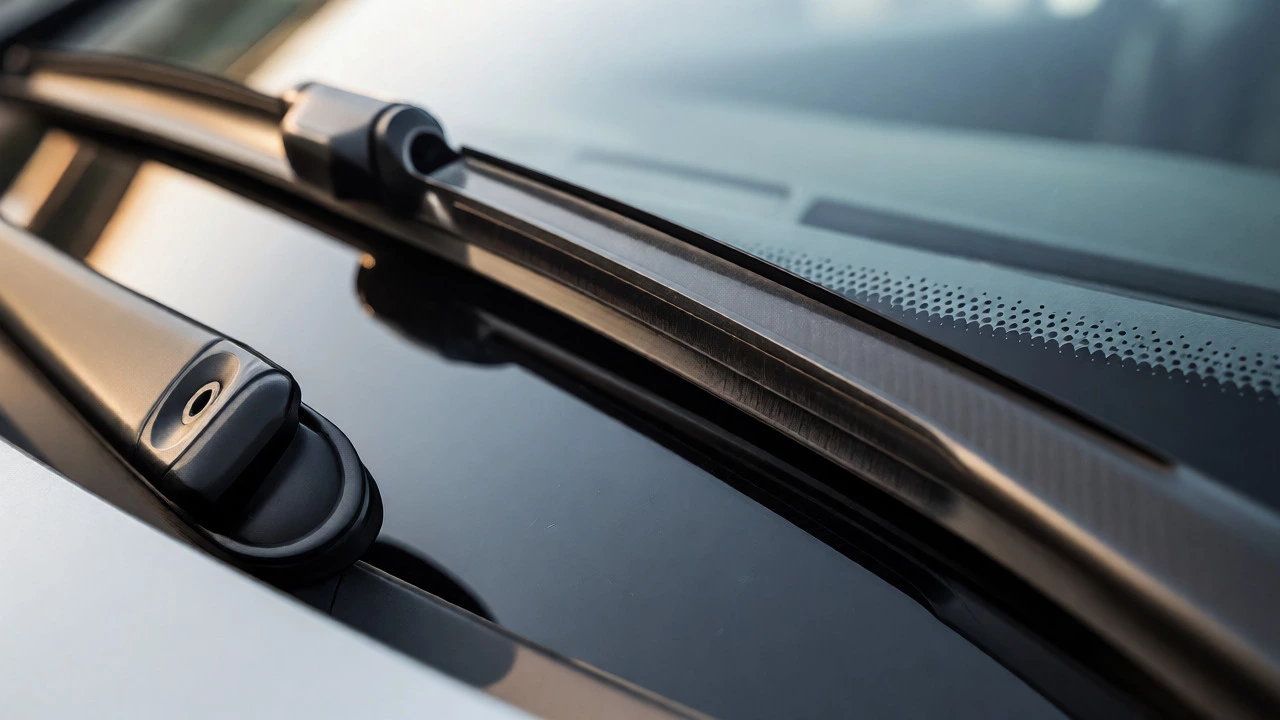
How to Test Fitment Safely
If you’ve already bought the 24-inch blades and want to see if they work, follow this procedure before you drive in the rain.
- Visual Inspection: Install the blades carefully. Ensure the hooks or connectors are secure. Loose blades will fly off at speed.
- Manual Sweep: Lift the wiper arms and gently swing them through their full range of motion. Watch the tips. Do they hit the windshield trim? Do they overlap with the opposite blade?
- Water Test: Spray the windshield with washer fluid or hose water. Run the wipers on low and high settings. Listen for grinding noises from the motor. Look for skipping or bouncing.
- Speed Simulation: If possible, take the car for a short drive at 60 km/h (approx. 40 mph) with the wipers on. Aerodynamic lift is significant at speed. If the blades start lifting off the glass and fluttering, the arm tension is insufficient for the larger blade profile.
If the blades pass all these checks, enjoy the improved visibility. If they fail any step, revert to the 22-inch size. Don’t risk your safety for an extra inch of coverage.
Alternatives to Upsizing
If you find that 24-inch blades don’t fit, but you still feel like your current wipers aren’t doing a good job, consider changing the blade type rather than the size.
Beam blades (also known as frameless or flat blades) often perform better than traditional bracketed blades, even at the same length. They distribute pressure evenly along the entire edge, conforming better to curved windshields. Switching from a conventional bracketed 22-inch blade to a high-quality beam 22-inch blade can significantly improve performance without risking fitment issues.
Another option is checking for "longer arm" variants. Some manufacturers offer wiper arms specifically designed to accommodate slightly larger blades while maintaining proper clearance. These are rare in the aftermarket but worth checking if you own a popular model like a Toyota Hilux or Ford Ranger, where community forums often document successful modifications.
Will using larger wiper blades void my warranty?
Generally, no. Wiper blades are considered consumable wear-and-tear items. However, if you damage the wiper motor or linkage system because you forced incompatible blades onto the arms, the repair for that specific damage might not be covered. Always check your specific vehicle warranty terms regarding non-OEM parts.
What happens if the wiper blades hit each other?
If the blades collide in the center of the windshield, it causes several problems. First, the rubber edges tear quickly, leading to streaking. Second, the impact stresses the wiper transmission linkage, potentially bending the metal arms. Third, the motor has to work harder to overcome the resistance, which can lead to premature motor failure. It also looks unprofessional and distracts the driver.
Can I cut a 24-inch blade to make it 22 inches?
You can physically cut the rubber refill, but it is not recommended for the whole assembly. Most wiper blades have internal springs or tension mechanisms that rely on the full length for proper curvature. Cutting the frame usually ruins the structural integrity, causing the blade to bow incorrectly and leave gaps on the glass. It is cheaper and more effective to buy the correct size.
Does blade length affect fuel efficiency?
The effect is negligible for most drivers. While larger blades create slightly more aerodynamic drag, the difference in fuel consumption is so small it is undetectable in real-world driving conditions. Do not worry about mileage when choosing wiper size; focus on visibility and fitment.
Are expensive wiper brands worth it for oversized blades?
Yes, especially if you are experimenting with a size increase. Premium brands like Bosch or Valeo often use higher-grade natural rubber and better tension springs. These features help maintain contact pressure even if the blade is slightly oversized or if the arm tension is marginal. Cheaper blades may lack the rigidity needed to handle the altered leverage of a longer blade.