Fuel Pump Replacement Cost Estimator
*Estimates include new O-rings and fuel filter if applicable. Prices vary by region and specific make/model. Always get a written quote.
Imagine you're halfway to a weekend getaway when your engine sputters and dies. No crank, no fire. The diagnostic tool points to the fuel pump, an electric or mechanical device that moves gasoline from the tank to the engine at high pressure. Now comes the real headache: how much is this going to hurt your wallet? In 2026, replacing a fuel pump isn't just about buying a part; it's a mix of component prices, labor hours, and vehicle complexity. For most drivers, the total bill lands between $400 and $1,200, but outliers exist on both ends.
The Real Numbers: Parts vs. Labor
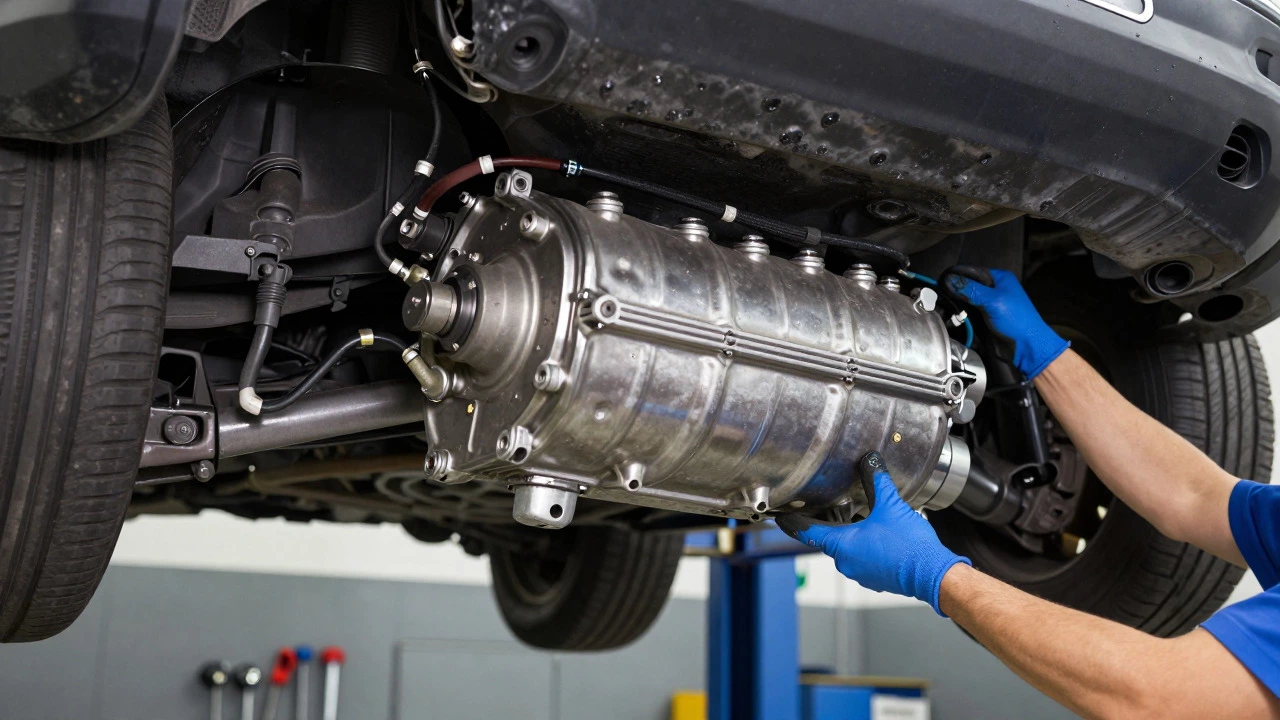
Let’s break down where your money goes. The part itself-the fuel pump assembly-usually ranges from $100 for basic aftermarket units to over $300 for OEM (Original Equipment Manufacturer) parts from dealerships. But here’s the kicker: labor often costs more than the part. Why? Because in many modern cars, the fuel pump lives inside the fuel tank. To replace it, a mechanic has to drop the entire tank, drain fuel, disconnect lines, and reassemble everything. That takes 2 to 4 hours of skilled work.
Labor rates vary wildly by location. In rural areas, you might pay $75 per hour. In major cities like New York or San Francisco, independent shops charge $150-$200 per hour. Dealerships can hit $250+. So, if your car requires 3 hours of labor at $150/hour, that’s $450 just for wages, plus the $200 part. Total: $650. Simple math, right? Not quite. Complexity adds up fast.
| Vehicle Type | Part Cost | Labor Hours | Total Estimated Cost |
|---|---|---|---|
| Economy Sedan (e.g., Toyota Corolla) | $80 - $150 | 1.5 - 2.5 | $300 - $600 |
| Mainstream SUV (e.g., Honda CR-V) | $120 - $250 | 2 - 3 | $450 - $800 |
| Luxury Sedan (e.g., BMW 3 Series) | $200 - $400 | 3 - 4 | $700 - $1,200 |
| Truck/SUV with Complex Tank | $150 - $350 | 3 - 5 | $600 - $1,100 |
Why Some Cars Are More Expensive
Not all fuel pumps are created equal. Older cars often have external fuel pumps mounted along the frame rail. These are easier to access, meaning lower labor costs. Think of a 2005 Ford F-150; the pump is under the bed, accessible without dropping the tank. Fast job, cheaper bill.
Newer vehicles hide the pump inside the tank for noise reduction and safety. This design choice shifts the cost burden to labor. If your car has a complex suspension setup or a full-size spare tire blocking access, mechanics need extra time to maneuver the tank out. Add in rusted bolts or corroded electrical connectors, and you’re looking at an additional hour of frustration-and billing.
Hybrid and electric-hybrid vehicles add another layer. While pure EVs don’t have fuel pumps, hybrids do. Their systems are tightly integrated with battery management, requiring specialized diagnostics. A misdiagnosis here could mean replacing a $200 part when the issue was actually a $50 relay. Always ask for a diagnostic fee waiver if you proceed with the repair.
OEM vs. Aftermarket: Does It Matter?
You’ve got two main choices for the part: OEM or aftermarket. OEM parts come from the same manufacturer as your original equipment. They fit perfectly and last longer, typically 100,000+ miles. Aftermarket parts are made by third-party companies like Bosch, Denso, or Airtex. Good brands match OEM quality at 30% less cost. Cheap generic brands? They might fail in 2 years.
Here’s a rule of thumb: if you plan to keep your car for 5+ years, buy OEM or premium aftermarket (Bosch/Denso). If you’re selling soon, save money with mid-tier aftermarket. Never go for the cheapest option unless you’re okay with repeating the job. Remember, paying $50 less now could cost you $500 later in labor again.
DIY: Can You Save Money?
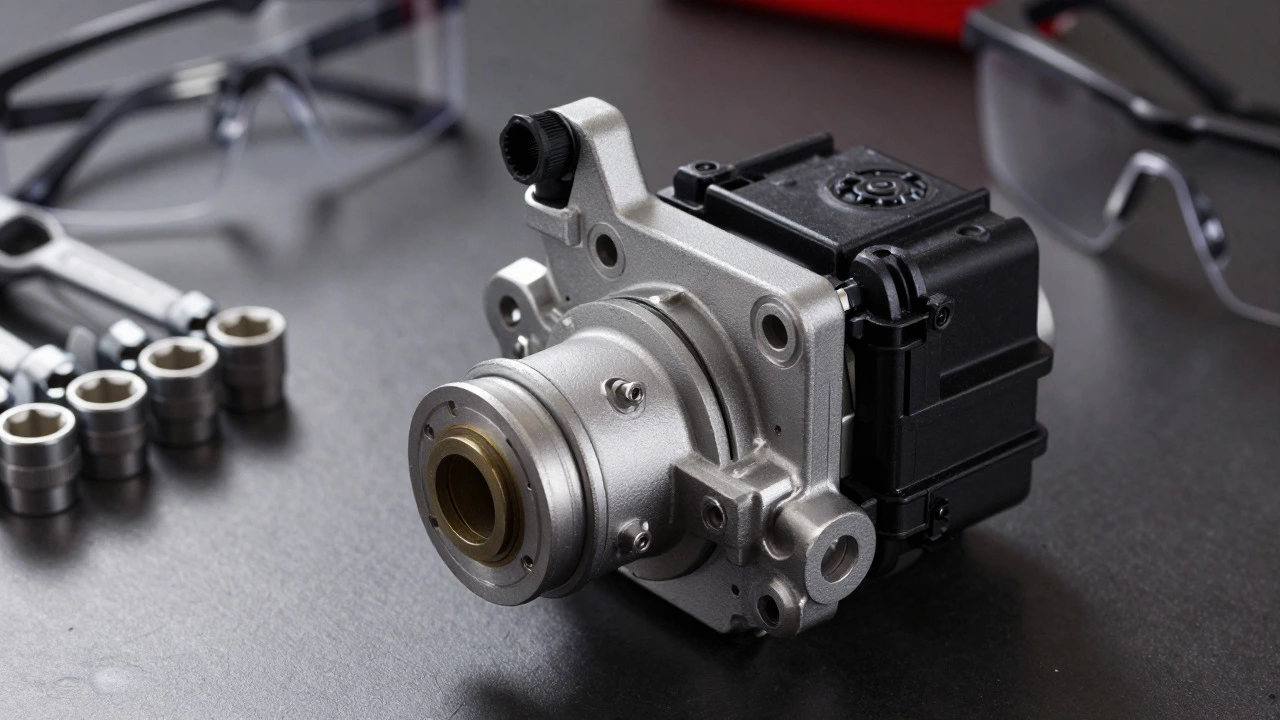
Yes, but only if you’re handy. Dropping a fuel tank involves heavy lifting, fuel spillage risks, and precise torque specifications. If you strip a bolt or crack a sending unit, you’ve turned a $500 job into a $900 one. Tools needed include a jack stands set, socket wrenches, fuel line disconnect tools ($15 online), and safety glasses.
Watch YouTube tutorials specific to your make and model first. If the video shows three people struggling to remove the tank, maybe call a pro. DIY saves roughly 50-70% of the total cost, but factor in your time. Four hours of your Saturday might be worth more than $300 in savings.
Warning Signs You Need a Replacement
Don’t wait until the car won’t start. Early signs include whining noises from the rear seat area, loss of power on hills, or hard starting after sitting overnight. A failing pump struggles to maintain pressure, causing lean fuel mixtures that trigger check engine lights (codes P0171/P0174).
Testers measure fuel pressure in PSI. Most cars require 30-60 PSI. If readings fluctuate or drop below spec, the pump is dying. Ignoring this leads to catalytic converter damage-a $1,000+ mistake. Catching it early keeps repairs manageable.
How to Get the Best Price
Get three quotes. Call local independent shops, not just dealerships. Ask specifically: "Does this quote include new O-rings, filters, and fuel filter replacement?" Often, the pump comes with a strainer sock that should be replaced simultaneously. Skipping it voids warranties.
Check if your state mandates emissions testing post-repair. Some states require a smog check after fuel system work, adding $50-$100. Also, ask about warranty coverage. Reputable shops offer 12 months/12,000 miles on parts and labor. Avoid places offering "lifetime" warranties-they rarely cover labor.
Frequently Asked Questions
Can I drive with a bad fuel pump?
Short term, yes, but risky. The pump may cut out suddenly, leaving you stranded. It can also cause rough idling or stalling, which is dangerous in traffic. Drive minimally to a shop.
How long does a fuel pump last?
Typically 100,000 to 150,000 miles. However, running the tank low frequently overheats the pump (fuel cools it), shortening its life. Keep at least a quarter tank.
Is it cheaper to replace just the pump or the whole assembly?
Replacing the whole assembly (pump + sender + float) is usually recommended. The sender unit often fails around the same time, and separating them risks damaging seals. Assembly kits cost slightly more but save future labor.
Do I need to change the fuel filter too?
Yes. A clogged filter strains the pump, causing premature failure. Many modern cars integrate the filter into the pump assembly. If separate, replace it during the pump job.
What causes fuel pump failure?
Common causes include running on empty, dirty fuel, electrical issues, or simply age. Contaminants clog the internal strainer, forcing the motor to work harder until it burns out.