Radiator Health & Maintenance Checklist
Inspection Steps
Click each item as you complete it during your inspection.
Assessment Result
Complete checks to see results
Your car’s engine runs hot. Really hot. Without a proper cooling system, metal parts would warp, seals would fail, and you’d be stranded on the side of the highway in minutes. The car radiator is the heat exchanger that dissipates engine heat into the atmosphere sits at the heart of this process. But here’s the thing: radiators don’t just fail overnight. They degrade slowly, often giving you warnings long before a catastrophic breakdown occurs.
If you’ve ever seen steam rising from your hood or noticed your temperature gauge creeping toward the red zone, you know how stressful an overheating event can be. The good news? You can prevent most of these issues with a few simple checks. In this guide, we’ll walk through exactly how to inspect your radiator, what signs to look for, and when it’s time to call a professional.
The Quick Summary: What You Need to Know
- Never open a hot radiator cap. Wait until the engine is completely cool to avoid severe burns from pressurized steam.
- Check coolant levels regularly. Low fluid is the most common cause of overheating and easy to fix if caught early.
- Inspect for leaks visually. Look under the car for puddles and around hoses for cracks or wet spots.
- Monitor the temperature gauge. If it stays above normal operating range, stop driving immediately.
- Flush and replace coolant every 2-5 years. Old coolant loses its corrosion inhibitors and becomes acidic.
Why Your Radiator Matters More Than You Think
Think of your car’s engine as a machine designed to burn fuel efficiently. That combustion generates immense heat-often exceeding 2,000°F (1,093°C) inside the cylinders. If that heat isn’t removed, the engine seizes. The cooling system is a closed loop that circulates coolant through the engine and radiator to regulate temperature handles this job.
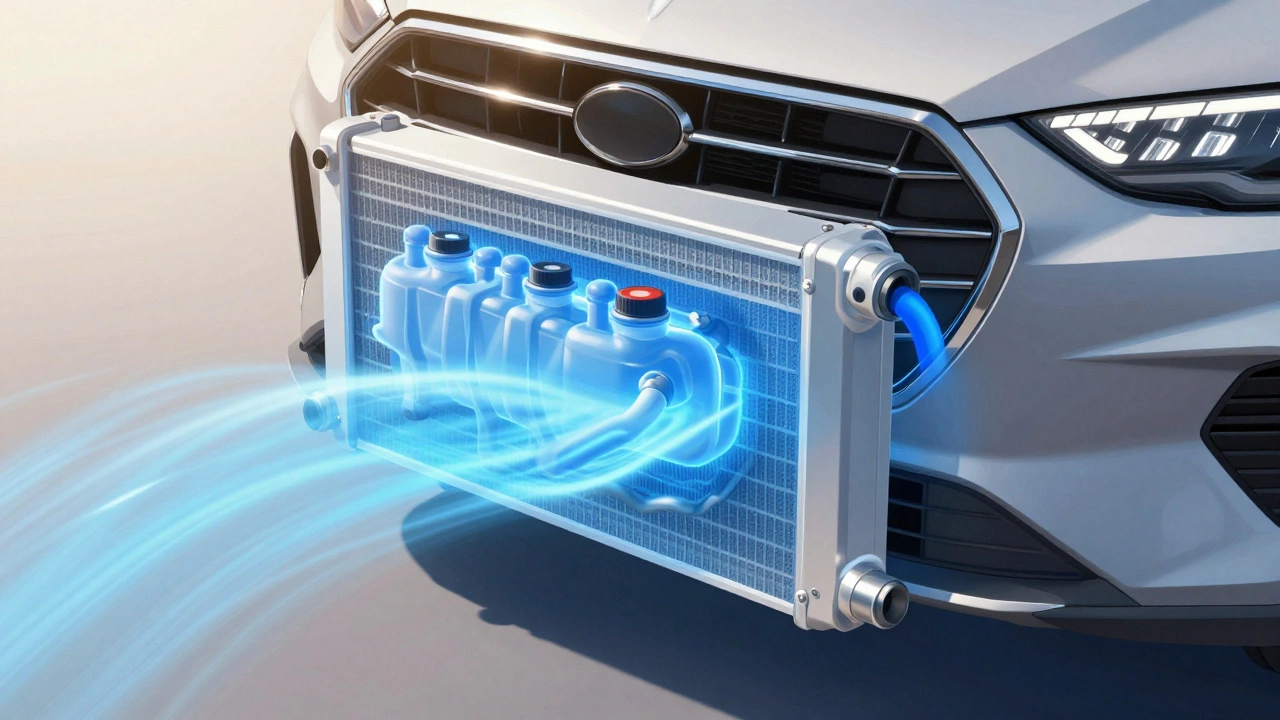
The radiator itself is made of thin aluminum or copper fins sandwiched between plastic tanks. Coolant flows through tubes inside the radiator while air passes over the fins. This transfer cools the liquid before it returns to the engine. Over time, debris clogs those fins, corrosion eats away at the tubes, and seals dry out. Any one of these issues reduces efficiency.
In Adelaide, where summer temperatures regularly hit 40°C (104°F), your cooling system works harder than ever. Add traffic jams or steep hills, and the load increases further. Regular checks aren’t optional-they’re essential for keeping your car running reliably.
Tools You’ll Need for a Basic Inspection
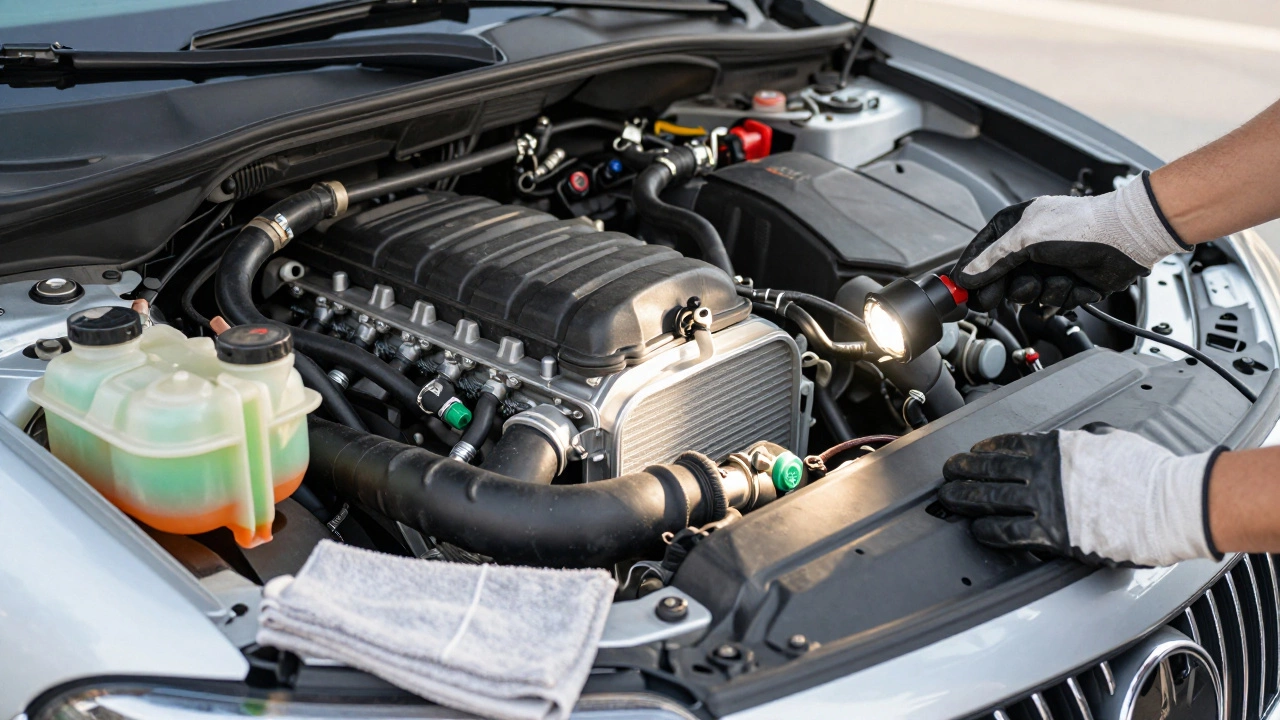
You don’t need a full garage setup to check your radiator. Here’s what you should have on hand:
- Gloves: Protect your hands from sharp edges and chemical exposure.
- Rag or paper towels: For wiping spills and checking for residue.
- Flashlight: Helps you see into tight spaces under the hood.
- Coolant tester strip: Available at auto shops; checks pH level and antifreeze concentration.
- Funnel: Useful if you need to top off coolant safely.
- Pressure tester kit (optional): Detects small leaks by pressurizing the system.
Most of these items are inexpensive and worth having in your toolkit. If you skip them, you might miss subtle signs of trouble.
Step-by-Step: How to Check Your Radiator Safely
Before touching anything, make sure the engine is cold. Opening a hot radiator releases scalding steam and pressurized fluid. Burn injuries from this are common and serious. Wait at least two hours after driving, or do the check first thing in the morning.
- Locate the radiator. It’s usually behind the front grille, directly in front of the engine. You’ll see a large rectangular unit with hoses connected to the top and bottom.
- Check the coolant reservoir. Most modern cars use a separate overflow tank instead of filling directly into the radiator. Look for “MIN” and “MAX” marks on the side. If the level is below MIN, add the correct type of coolant.
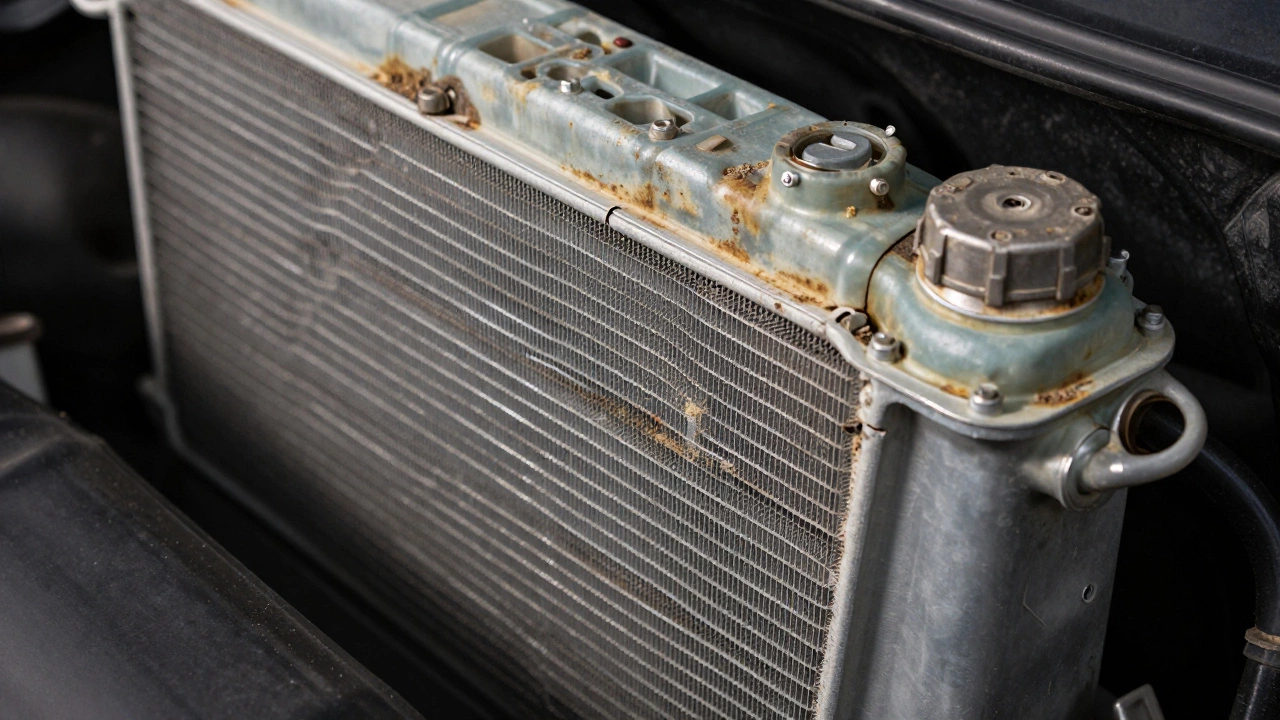
- Inspect the radiator cap area. Even if you don’t remove the cap, look around it for crusty deposits or green/brown staining. These indicate past leaks or corrosion.
- Examine the hoses. Squeeze the upper and lower radiator hoses gently. They should feel firm but slightly flexible. If they’re hard like rock or squishy like a balloon, they may be failing.
- Look for external damage. Check the front of the radiator for bent fins, cracks, or rodent nests. Use your flashlight to peer between the fins for blockages.
- Check underneath the car. Park on clean pavement and look for dark puddles. Coolant is typically green, orange, or pink and has a sweet smell. Oil leaks are black and thick; brake fluid is clear or yellow.
- Start the engine and monitor the gauge. Let it idle for five minutes. The temperature should stay in the middle of the gauge. If it climbs higher, turn off the engine and investigate further.
If everything looks fine, great. If not, don’t ignore minor issues. Small problems become big ones fast.
Signs Your Radiator Is Failing
Sometimes the visual inspection isn’t enough. Your car will give you clues through behavior and symptoms. Watch for these red flags:
- Frequent overheating. If your temperature gauge spikes during normal driving, especially in heat or traffic, your cooling system isn’t doing its job.
- Low coolant levels without visible leaks. This could mean a slow internal leak, such as a blown head gasket letting coolant mix with oil or exhaust.
- Discolored coolant. Fresh coolant is bright and clear. If it looks muddy, rusty, or oily, contamination has occurred.
- Steam from the hood. White vapor coming from under the hood means boiling coolant. Stop immediately and let the engine cool.
- Noise from the water pump. A whining or grinding sound near the front of the engine suggests bearing failure in the pump that circulates coolant.
- Heater blowing cold air. The cabin heater uses hot coolant. If airflow feels chilly despite warm weather settings, circulation may be blocked.
Any one of these signs warrants attention. Two or more together likely point to a failing radiator or related component.
Common Mistakes People Make When Checking Radiators
I’ve seen too many DIYers rush this process. Avoid these pitfalls:
- Opening the cap while hot. I cannot stress this enough. Pressurized systems explode when opened prematurely. Wait until cold.
- Mixing coolant types. Different formulations (ethylene glycol vs. propylene glycol, organic acid technology vs. inorganic) can react chemically and form sludge. Stick to your manufacturer’s recommendation.
- Ignoring the thermostat. A stuck-closed thermostat prevents coolant flow even if the radiator is perfect. Replace thermostats proactively every 5-7 years.
- Using tap water instead of distilled. Tap water contains minerals that accelerate corrosion inside the radiator and water pump.
- Assuming all leaks come from the radiator. Hoses, clamps, the water pump, and the heater core also leak. Diagnose thoroughly before replacing expensive parts.
These errors cost time and money. Take your time and follow best practices.
When to Call a Professional
Some jobs are safe for homeowners. Others require specialized tools and knowledge. Seek help if:
- You suspect a blown head gasket (white smoke from exhaust, milky oil).
- The pressure test reveals no external leak but coolant still disappears.
- You need to replace the water pump or thermostat housing.
- The radiator requires internal flushing due to heavy rust or sediment buildup.
- Your vehicle uses a complex dual-loop cooling system (common in luxury or performance models).
A qualified mechanic can perform diagnostics you can’t replicate at home, including infrared scanning for hot spots and electronic pressure testing.
| Type | Color | Lifespan | Best For | Not Compatible With |
|---|---|---|---|---|
| IAT (Inorganic Acid Technology) | Green | 2-3 years | Older vehicles (pre-2000) | OAT, HOAT |
| OAT (Organic Acid Technology) | Orange, Red | 5 years / 150,000 km | GM, Ford, Chrysler | IAT |
| HOAT (Hybrid OAT) | Yellow, Orange | 5 years / 150,000 km | BMW, Mercedes, VW | Pure IAT |
| Propylene Glycol | Pink, Clear | 3-5 years | Eco-friendly applications | None (universal) |
Maintenance Tips to Extend Radiator Life
Prevention beats repair. Follow these habits to keep your cooling system healthy:
- Top off coolant monthly. Especially before long trips or hot seasons.
- Flush the system every 50,000 km. Removes accumulated contaminants and restores inhibitor levels.
- Keep the radiator clean. Blow out bugs, leaves, and dust with compressed air annually.
- Replace hoses proactively. Rubber degrades over time. Swap them every 6-8 years regardless of appearance.
- Use a quality fan shroud. Ensures airflow reaches the entire radiator surface, not just the center.
- Avoid idling excessively. Prolonged low-speed operation reduces airflow and raises temps.
Small efforts now save thousands later. A new radiator can cost $300-$600 installed. Preventive care keeps that expense far away.
Frequently Asked Questions
Can I drive my car if the radiator is leaking?
Only for a very short distance to reach safety. Driving with a leaking radiator risks complete loss of coolant, leading to engine seizure. Pull over immediately, turn off the engine, and arrange towing if necessary.
How often should I check my coolant level?
At least once a month, and always before long trips or extreme weather conditions. Modern sealed systems lose minimal fluid, but evaporation and minor leaks still occur over time.
What does it mean if my coolant smells sweet?
Ethylene glycol-based coolants have a distinctively sweet odor. If you smell it inside the cabin or outside the vehicle, there’s likely a leak. Do not inhale fumes deeply and seek repair promptly.
Is it okay to mix different colored coolants?
Generally no. Mixing incompatible formulas creates gel-like precipitates that clog passages and reduce heat transfer. Always match the original specification unless performing a full flush first.
How much does it cost to replace a car radiator?
Parts alone range from $150 to $400 depending on vehicle make and model. Labor adds another $100-$200. Total typical installation costs fall between $250 and $600 in Australia.
Can I use water temporarily if I run out of coolant?
Yes, in an emergency only. Distilled water is preferred. Tap water introduces minerals that corrode internal components. Refill with proper coolant mixture as soon as possible.
Why does my radiator make a hissing noise?
Hissing usually indicates trapped air escaping or a failing pressure cap. Air pockets disrupt coolant flow and cause localized overheating. Bleed the system according to manufacturer instructions.
Does driving in city traffic affect radiator life?
Yes. Stop-and-go traffic reduces airflow across the radiator, forcing the electric fan to work harder. Engines run hotter overall, accelerating wear on hoses, pumps, and seals.