Brake Noise: What It Means and How to Fix It
When your car makes a high-pitched squeal or a deep grinding sound when you hit the brakes, it’s not just annoying—it’s a brake noise, an audible sign that your braking system is under stress or failing. Also known as brake squeal, it’s one of the most common car warning signs drivers ignore until it’s too late. Most people think brake noise means worn pads, but that’s only part of the story. The real issue is often a chain reaction: worn pads damage rotors, bad rotors cause uneven contact, and that leads to vibration, noise, and reduced stopping power.
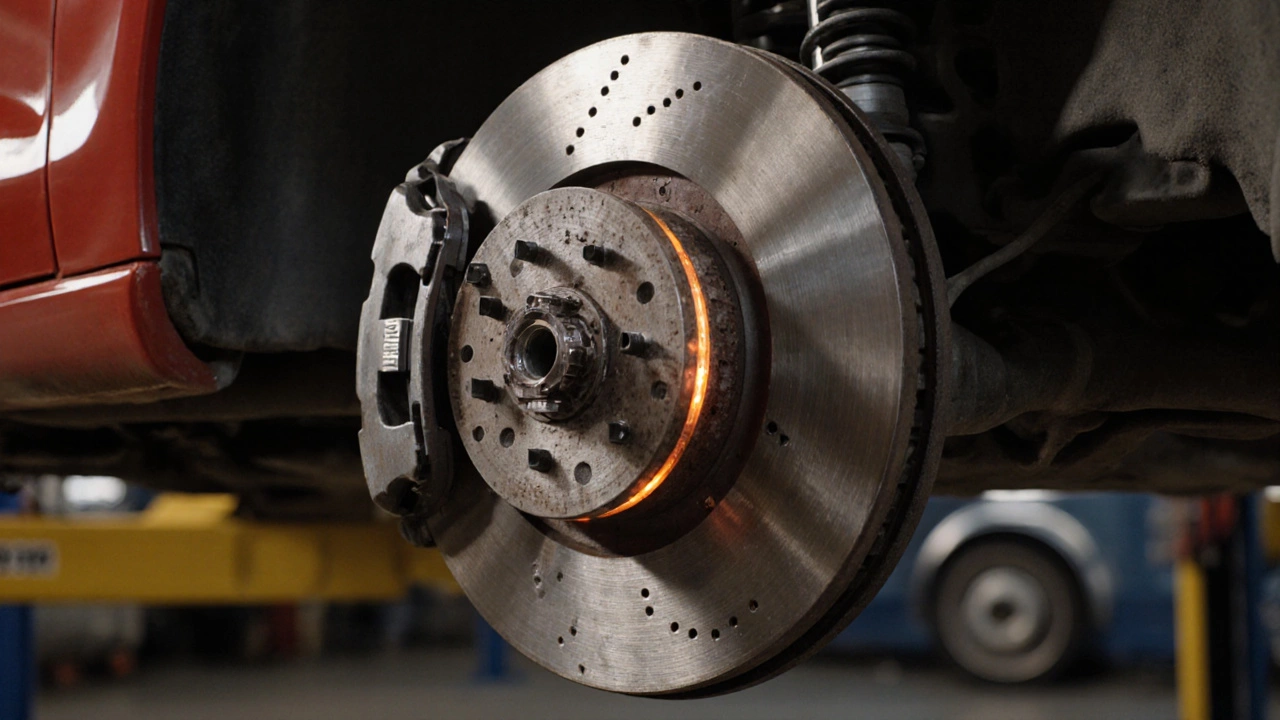
You can’t fix brake noise by just spraying something on it. The root cause is almost always mechanical. A brake pad, the friction material that presses against the rotor to slow your car that’s worn thin will start to metal-to-metal grind, especially if you’ve driven past the wear indicator. That’s when the brake rotor, the spinning disc the pads clamp down on gets scored or warped. Once that happens, even new pads won’t fix the noise—you’ll need new rotors too. And if you delay, you risk overheating the calipers, warping the hubs, or even losing braking power completely.
Not all brake noise is dangerous. A light squeak after rain or cold mornings is normal—moisture and temperature changes cause temporary surface rust that clears after a few stops. But a constant grinding, a rhythmic thumping, or a screech that gets louder every time you brake? That’s not normal. It’s a signal your system is breaking down. Many drivers wait until the noise gets unbearable, then panic when they see a $600 repair quote. But catching it early? That’s often just a $150 pad swap and a quick rotor resurfacing.
What you’ll find below are real, practical guides from drivers who’ve been there. You’ll learn how to tell if your brake noise is a warning or just a nuisance. You’ll see which brake pads actually reduce noise without sacrificing stopping power. You’ll find out why replacing pads alone sometimes makes things worse—and when you absolutely need to replace rotors too. No fluff. No guesswork. Just clear, step-by-step fixes that work on everyday cars, not just luxury models.