Brake Pad Warning Signs: How to Tell When Your Brakes Are Failing
Get the inside scoop on how to spot worn brake pads fast. Learn the sounds, sensations, and visual clues that could save your brakes—and your wallet.
View moreWhen your car brakes, the system that slows or stops your vehicle using friction between pads and rotors. Also known as braking system, it's one of the most critical safety features on any vehicle. If they fail, you don't get a second chance. Most people wait until they hear a loud grinding noise—but by then, the brake rotors, the metal discs that brake pads clamp down on to create stopping power are already damaged. Replacing rotors costs way more than replacing pads alone. You don’t need a mechanic to spot the early signs. Squealing when you slow down? That’s the wear indicator rubbing against the rotor. It’s not a bug—it’s a built-in alarm.
Brake pads wear out based on how you drive. City driving with constant stops? You might need new pads every 30,000 miles. Highway driving with gentle braking? They could last 70,000. But it’s not just mileage. If your car pulls to one side when braking, that’s uneven pad wear or a stuck caliper. A soft or spongy pedal means air in the lines or low brake fluid. And if you feel vibration through the steering wheel, your rotors are warped. These aren’t vague problems—they’re clear signals. Ignoring them doesn’t save money. It just turns a $150 brake pad job into a $600 rotor and caliper repair.
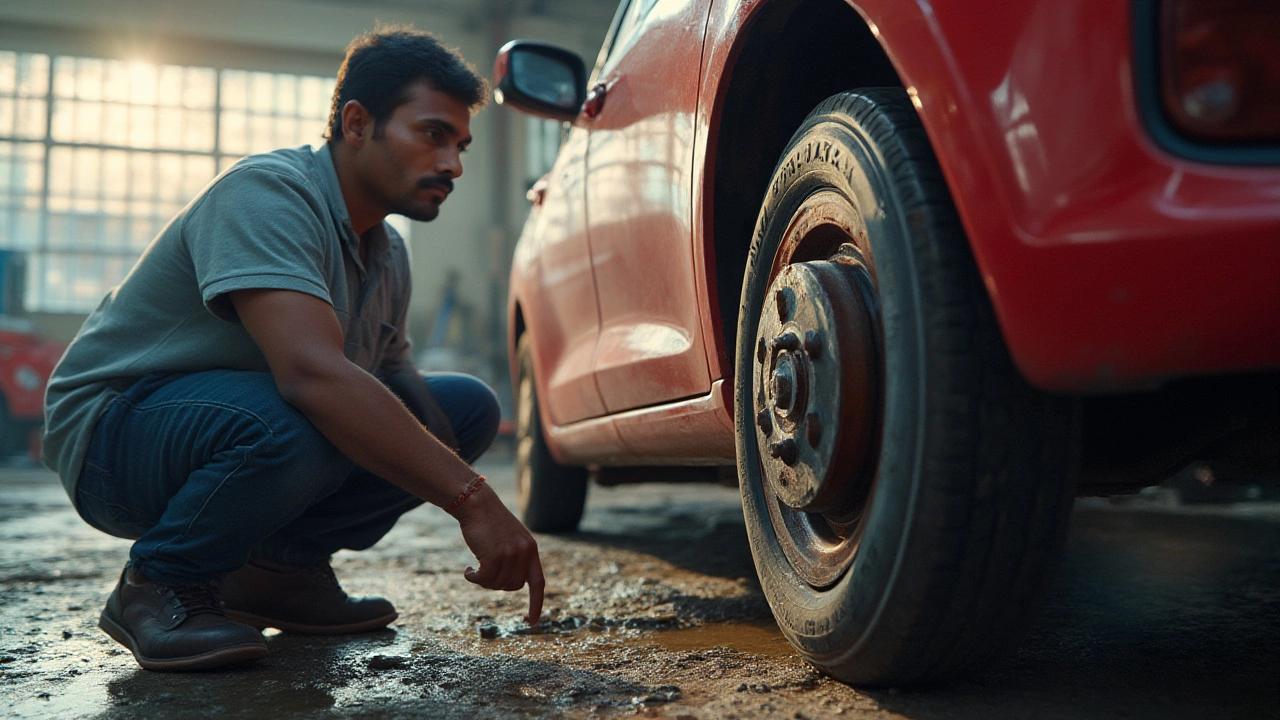
Many drivers think replacing just the pads is enough. But if the rotors are scored or thin, new pads won’t grip right. That means longer stopping distances and more heat buildup. And heat? It’s the enemy of brake performance. You can’t see rotor wear with the naked eye, but you can feel it. A simple check: look through the wheel spokes. If the rotor surface looks shiny and smooth, it’s probably okay. If it’s grooved or has dark spots, it’s time to replace or resurface. Don’t guess. Test it. Press the brake pedal while the car is off. If it goes to the floor, you’ve got a serious leak or air in the system. That’s not a "maybe"—it’s a stop-driving-now situation.
There’s no magic formula for brake life. But there are clear signs you can learn in minutes. Listen. Feel. Look. Your brakes talk to you every time you slow down. The trick is paying attention before it’s too late. Below, you’ll find real-world guides on how to spot worn pads, why brake noise happens, when to skip a simple replacement, and what actually fixes brake problems—not just cover them up.
Get the inside scoop on how to spot worn brake pads fast. Learn the sounds, sensations, and visual clues that could save your brakes—and your wallet.
View more