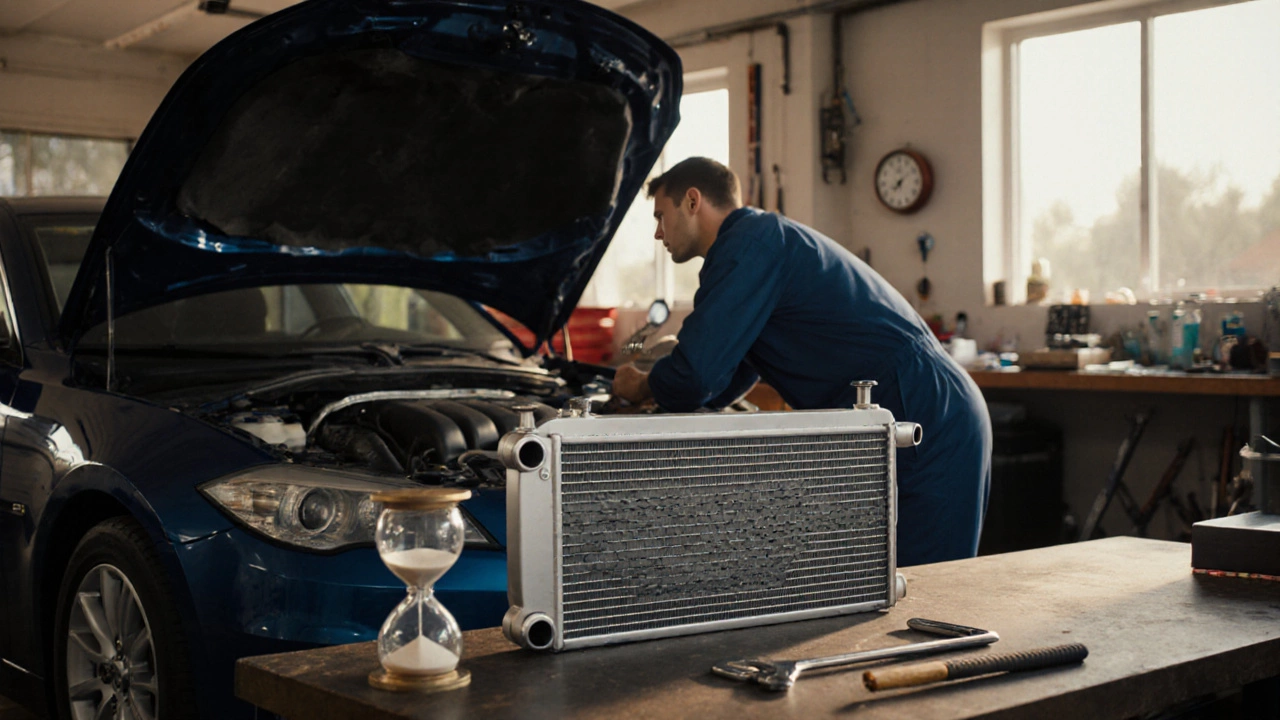
How Long Does It Take to Replace a Car Radiator? - Hours Explained
Find out exactly how many hours a radiator swap takes, whether you do it yourself or visit a garage, with step‑by‑step timings, tools, and cost tips.
View moreWhen you hear professional radiator install, the process of removing and replacing a car’s radiator with proper tools, alignment, and fluid handling to ensure optimal cooling system performance. Also known as radiator replacement, it’s one of those jobs that seems simple until you realize how much can go wrong if you skip the details. A radiator isn’t just a metal box—it’s the heart of your engine’s cooling system. If it fails, your engine overheats. Fast. And that’s not a warning light you can ignore for long.
A cooling system, the network of parts including the radiator, thermostat, water pump, hoses, and coolant that regulate engine temperature works as a team. Replace the radiator but leave old, cracked hoses or a stuck thermostat? You’re setting yourself up for another breakdown. A radiator hose, the flexible tubes that carry coolant between the engine, radiator, and heater core can dry out and crack over time. Many people replace the radiator but forget to check these. That’s like changing your car’s battery but not cleaning the corroded terminals.
There’s no magic tool for a professional radiator install. It’s about patience, cleanliness, and knowing when to stop and think. Drain the coolant properly—don’t just yank the hose and let it spill. Flush the system if the old fluid is dirty or rusty. Use the right coolant type for your make and model. Toyota doesn’t use the same fluid as Ford. And don’t over-tighten the fittings. Aluminum radiators and plastic tanks crack easy. A little torque goes a long way.
Temperature sensors, electric fans, and even the thermostat housing can get damaged during a radiator swap. A pro checks them all. You should too. If your car overheats again a week after the install, it’s not the radiator—it’s something else you missed. That’s why a proper install includes testing the whole system under load, not just refilling and hoping.
The posts below cover exactly what you need to avoid costly mistakes. You’ll find guides on spotting early signs of radiator failure, how to choose the right replacement, why coolant type matters more than you think, and what happens when you skip the flush. Some of these are step-by-step fixes you can do yourself. Others show why you should leave it to someone with the right tools. Either way, you’ll walk away knowing what to look for—and what to never ignore.
Find out exactly how many hours a radiator swap takes, whether you do it yourself or visit a garage, with step‑by‑step timings, tools, and cost tips.
View more