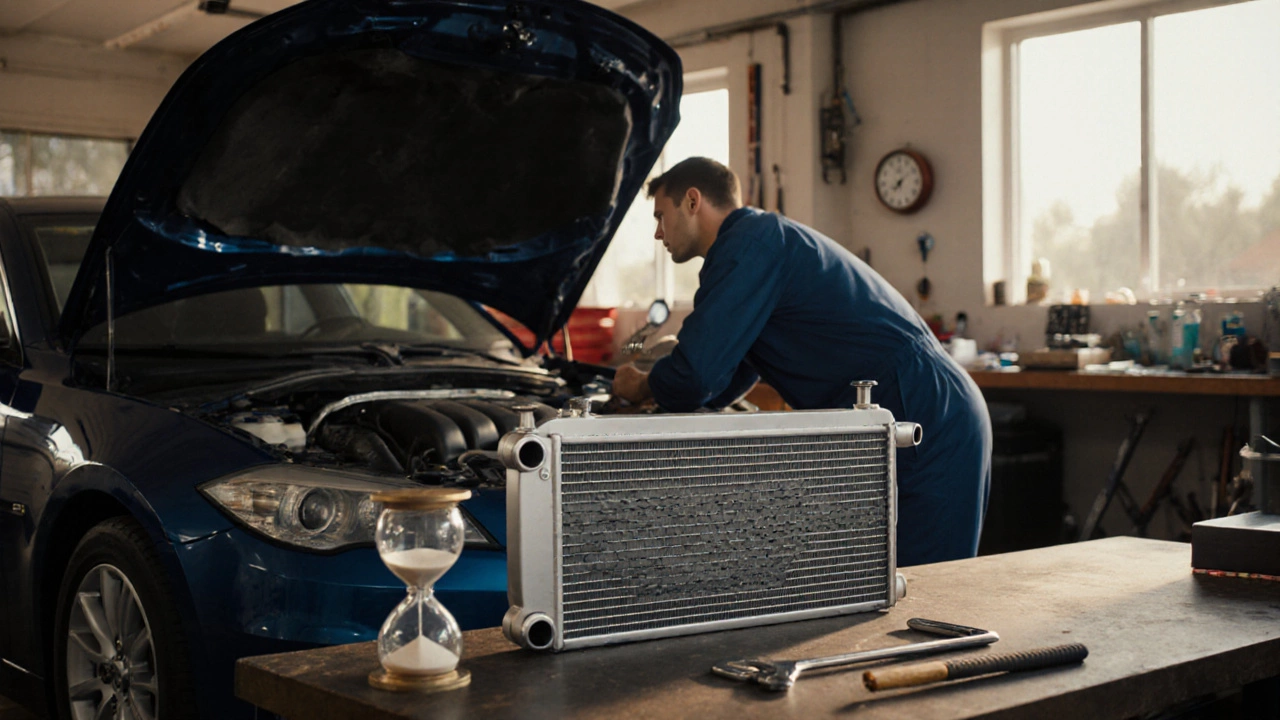
How Long Does It Take to Replace a Car Radiator? - Hours Explained
Find out exactly how many hours a radiator swap takes, whether you do it yourself or visit a garage, with step‑by‑step timings, tools, and cost tips.
View moreWhen your radiator, the core component of your car’s cooling system that prevents the engine from overheating. Also known as a cooling radiator, it circulates coolant to keep engine temperatures stable. A failing radiator doesn’t just cause inconvenience—it can wreck your engine in minutes. If you’re noticing steam, puddles under your car, or the temperature gauge creeping into the red, you’re not just dealing with a minor issue. You’re facing a radiator replacement time that can range from 2 to 8 hours, depending on your car’s make, your skill level, and whether other parts are damaged.
Most mechanics will tell you that replacing a radiator isn’t just about swapping out a metal tank. It’s tied to the whole cooling system, the network of hoses, thermostat, water pump, and coolant that work together to regulate engine heat. If your radiator is cracked or clogged, chances are your hoses are brittle, your thermostat is stuck, or your water pump is leaking. That’s why a full system check is usually done at the same time. Skipping this can lead to another breakdown in weeks. And if your car has a tight engine bay—like many modern sedans or European models—the job gets longer. Removing intake manifolds, fans, or even the AC condenser just to reach the radiator adds hours.
DIYers can save money, but only if they’re ready for the mess. Coolant spills, stubborn bolts, and air pockets in the system are common headaches. You’ll need a drain pan, wrench set, funnel, and the right coolant type. Most cars require a 50/50 mix of antifreeze and distilled water. Getting it wrong can cause corrosion or overheating. And don’t forget to bleed the air out—many people skip this, then wonder why their car still overheats after a "replacement."
Signs your radiator is done include visible rust or corrosion, coolant leaks near the bottom tank, frequent overheating even after refilling, or sludge in the coolant. If you’ve been topping off coolant every few weeks, that’s not normal—it’s a warning. Some cars, especially older models with plastic end tanks, fail around 80,000 to 120,000 miles. Others last longer with proper maintenance. But once it starts leaking, it won’t fix itself.
What affects the radiator replacement time? Your car’s age, location of the radiator, and whether you’re replacing it with an OEM part or an aftermarket one. Aftermarket radiators might be cheaper, but fit and flow can be off. A poorly fitted radiator might not cool as well, leading to more problems down the road. And if your engine already took damage from overheating, you might need more than just a radiator—head gasket, thermostat, or even a water pump replacement could be next.
Below, you’ll find real-world guides on related repairs—like fuel pump failure signs, brake pad wear, and windshield wiper replacement—that help you spot when something’s wrong before it turns into a roadside emergency. These aren’t just fixes—they’re ways to keep your car running safely without overpaying for unnecessary repairs.
Find out exactly how many hours a radiator swap takes, whether you do it yourself or visit a garage, with step‑by‑step timings, tools, and cost tips.
View more