Front Suspension Health Checker
Select any symptoms you are currently experiencing with your vehicle. This tool will estimate the severity of potential suspension issues.
Assessment Result
Recommendation:
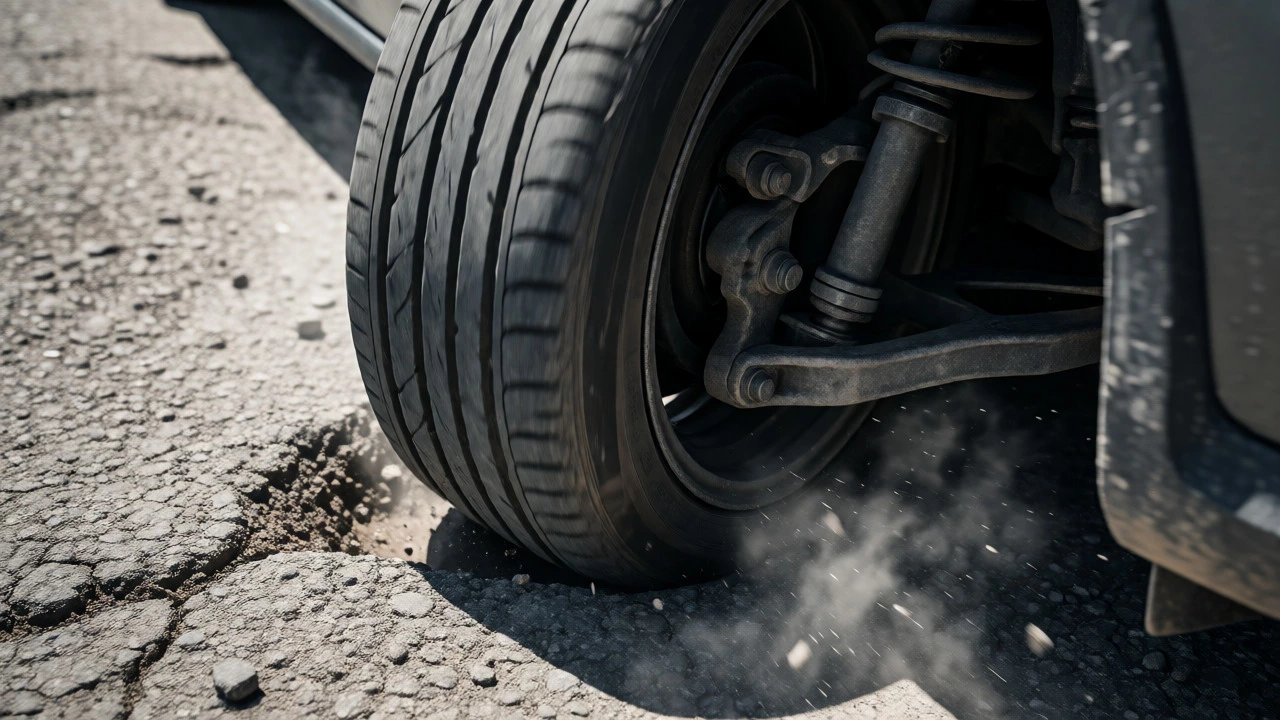
You’re cruising down the highway, and suddenly your steering feels loose. Or maybe you hit a small pothole in Adelaide, and your car bounces like it’s on stilts. These aren’t just annoyances-they are loud warnings that your front suspension is failing. When this system goes bad, it doesn’t just make your ride uncomfortable; it fundamentally changes how your car interacts with the road. Ignoring these signs can turn a minor repair into a major safety hazard or a costly bill for new tires.
The front suspension is arguably the most critical part of your vehicle’s chassis because it handles steering, braking stability, and weight transfer during acceleration. It’s not just about comfort. A healthy suspension keeps your tires flat on the pavement. When it fails, that contact patch disappears, leading to unpredictable behavior. Let’s break down exactly what happens when this system degrades, why it matters more than you think, and how to spot the trouble before you lose control.
The Immediate Impact on Steering and Handling
The first thing you’ll notice isn’t usually a noise-it’s a feeling. Your steering becomes vague. You might find yourself making constant small corrections just to keep the car straight in its lane. This is often called "wander." On a smooth road, you might not notice it much, but cross a crown in the road or drive over a tram track, and the car will pull sharply to one side.
This happens because worn components, like ball joints or tie rod ends, introduce play into the steering geometry. Instead of translating your hand movements directly into wheel movement, there’s a gap-a delay-that makes the car feel disconnected from the driver. In emergency situations, such as swerving to avoid an obstacle, this vagueness can be dangerous. You might turn the wheel expecting the car to respond instantly, but instead, it lags or overcorrects once the slack is taken up.
Braking performance also suffers significantly. During hard braking, weight shifts forward onto the front axle. If your shock absorbers or struts are worn, they can’t control this dive effectively. The nose of the car dips excessively, which can alter the brake bias and reduce overall stopping power. More critically, if one side of the suspension collapses slightly under load while the other holds firm, the car may pull violently to one side under braking, requiring significant steering input to maintain direction.
Tire Wear Patterns That Scream "Replace Me"
Your tires are the first casualties of a bad front suspension. They act as diagnostic tools, showing you exactly where the problem lies through their wear patterns. You don’t need a mechanic to tell you something is wrong if you know what to look for.
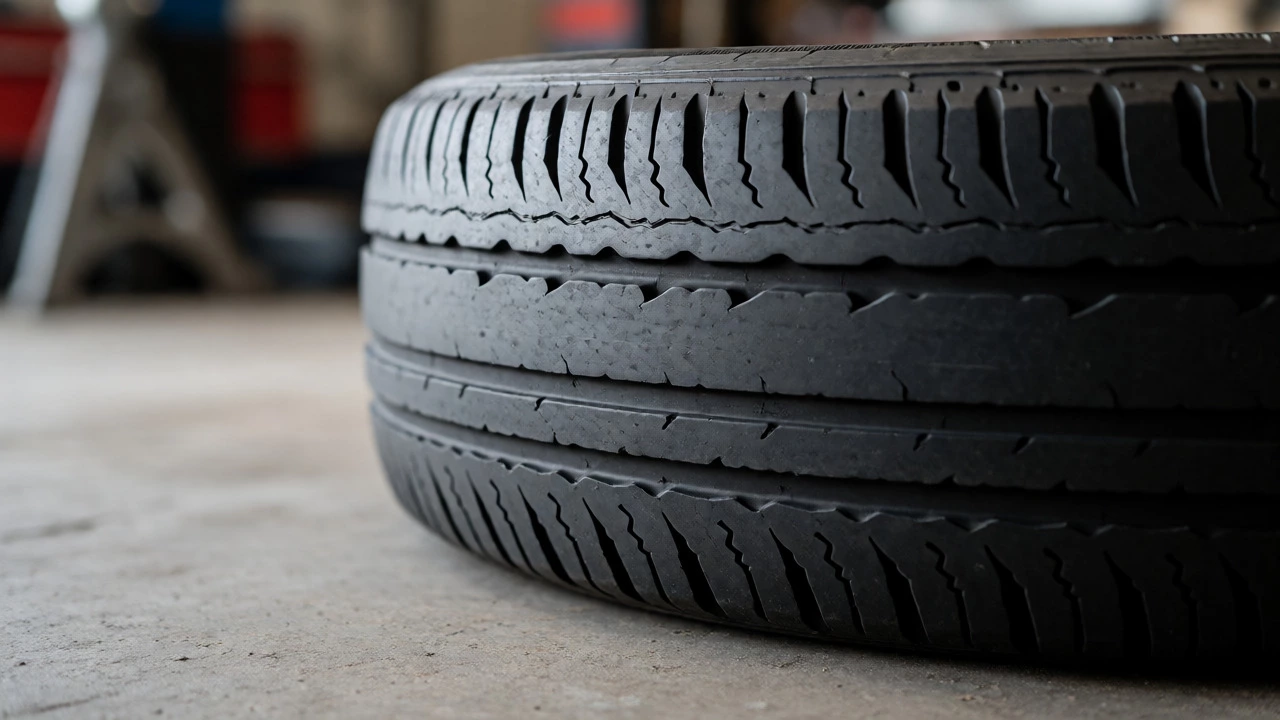
One common sign is uneven wear across the tread width. If the inner edges of your front tires are bald while the outer edges still have plenty of rubber, your suspension geometry has likely shifted due to worn bushings or bent components. Conversely, feathering-where the tread looks smooth in one direction but sharp in another-often points to alignment issues caused by suspension play.
Cupping, or scalloping, is another distinct pattern. This looks like a series of dips or cups around the circumference of the tire. It’s almost always caused by worn shock absorbers or struts. Because the damper can’t keep the tire pressed firmly against the road surface, the tire hops slightly with every bump. This hopping creates localized high-heat zones that eat away at the rubber faster than normal rolling friction would. Driving on cupped tires is noisy and reduces grip, especially in wet conditions.
| Wear Pattern | Visual Description | Likely Suspension Cause |
|---|---|---|
| Cupping (Scalloping) | Dips or waves around the tire circumference | Worn shocks or struts |
| Inner Edge Wear | Excessive wear on the inside shoulder | Worn lower control arm bushings or negative camber |
| Outer Edge Wear | Excessive wear on the outside shoulder | Worn upper strut mounts or positive camber |
| Feathering | Smooth in one direction, sharp ridges in the other | Toe misalignment due to loose tie rods |
Noises: The Language of Worn Parts
Suspension failures are rarely silent. As metal wears against metal, or as rubber deteriorates, the sounds change. Learning to identify these noises helps pinpoint the specific component that’s failing.
A clunking sound when going over bumps is the classic symptom of worn ball joints or sway bar links. Ball joints connect the control arms to the steering knuckles. When their internal grease dries out or the housing wears, they develop vertical play. Every time the suspension compresses, that joint slams against its limit stop, creating a heavy knock. Sway bar links, which help control body roll, are cheaper and easier to replace but produce a similar rattling noise, especially on rough roads.
Another common sound is a groaning or creaking noise when turning the steering wheel at low speeds, like when parking. This usually indicates dry or cracked strut mount bearings or lower control arm bushings. Rubber bushings isolate metal parts from each other to absorb vibrations. Over time, heat, oil, and age cause them to crack and harden. Once they lose their elasticity, they transmit road harshness directly into the cabin and create friction noises during articulation.
Don’t ignore squeaks either. While sometimes trivial, persistent squeaking from the front end often means a ball joint is losing its lubrication seal. If left unchecked, the joint can fail completely, potentially causing the wheel to detach from the control arm-a scenario that leads to immediate loss of steering control.
Safety Risks and Component Failure
The stakes get higher when you consider catastrophic failure. The front suspension carries the engine’s weight and manages the forces of steering and braking. If a key component snaps, the consequences are severe.
Consider the ball joint again. It’s a pivot point that allows the wheel to move up and down while turning. If it seizes or breaks, the wheel can collapse inward or outward unexpectedly. At highway speeds, this causes instant loss of steering. You might hear a loud bang, followed by the car pulling aggressively to one side. Recovering from this requires quick reflexes and often results in a visit to the tow truck.
Strut assemblies are another weak link. Modern cars often use coil-over struts that combine the spring and damper. If the strut shaft bends or the mounting plate cracks, the entire corner of the car drops. This throws off the alignment instantly and puts immense stress on the CV axles and wheel bearings. A collapsed strut isn’t just a comfort issue; it compromises the structural integrity of the front end.
Wheel bearings are closely tied to suspension health too. While technically part of the hub assembly, they rely on proper suspension alignment to last. Excessive play in the suspension loads the bearing unevenly, causing it to overheat and fail. A failed wheel bearing can lock up the wheel, leading to a blowout or a seized hub.
How to Diagnose It Yourself
You don’t need a lift to check your front suspension. A few simple tests can confirm your suspicions before you spend money at a shop.
- The Bounce Test: Push down hard on one corner of the front bumper and release. The car should bounce once and settle. If it continues to bounce two or three times, your shocks or struts are worn out and no longer damping the spring energy.
- The Wiggle Test: With the car safely jacked up and supported on stands, grab the tire at the 12 o’clock and 6 o’clock positions. Try to rock it vertically. Any play here suggests worn ball joints or strut mounts. Then, grab the tire at 3 and 9 o’clock and rock it horizontally. Play here indicates worn tie rod ends.
- Visual Inspection: Look behind the wheels. Check the rubber boots on the CV axles and ball joints. If they are torn, grease will leak out, accelerating wear. Also, look for oily residue on the shock absorber bodies. Wet, dark fluid means the internal seals have failed, and the damper is dead.
If any of these tests raise red flags, get a professional inspection. Suspension work involves torque specs and alignment settings that require precision tools. DIY repairs are possible for some parts, but improper installation can lead to premature failure or safety issues.

Cost vs. Consequence: Why Fixing It Matters
Replacing front suspension components costs money. Shocks, struts, control arms, and labor add up quickly. However, compare that cost to the alternatives. Running on bad suspension destroys tires. Replacing a set of four premium tires can cost as much as replacing two front struts and an alignment. By fixing the suspension early, you save twice.
Furthermore, fuel efficiency takes a hit. Poor rolling resistance from misaligned tires and increased drag from bouncing vehicles lowers your miles per gallon. In Australia, where long drives are common, this adds up over a year.
Finally, resale value. A car with known suspension issues sells for less. Buyers listen for knocks and feel for wander. A well-maintained suspension signals a cared-for vehicle, boosting buyer confidence and price.
Frequently Asked Questions
Is it safe to drive with a bad front suspension?
It depends on the severity. Minor wear like slight noise or mild bouncing is manageable for short distances, but you should schedule repairs soon. Severe issues, such as excessive play, broken springs, or leaking shocks, make driving unsafe, especially at high speeds or in wet conditions. The risk of losing control increases significantly.
How long does front suspension last?
Most modern vehicles are designed to last between 50,000 and 100,000 kilometers before major suspension components need replacement. However, this varies greatly based on driving conditions. Frequent driving on rough roads, carrying heavy loads, or aggressive driving habits can shorten this lifespan significantly.
Can bad suspension damage my transmission?
Yes, indirectly. If a ball joint or control arm fails completely, the sudden shift in wheel position can put extreme stress on the CV axles connected to the transmission. In worst-case scenarios, a detached wheel can snap a CV axle, potentially damaging the transmission output shaft or differential.
Do I need to replace all four shocks at once?
It is highly recommended to replace shocks or struts in pairs (both fronts or both rears) to maintain balanced handling. Replacing all four is ideal for uniformity, especially if the rear ones are old too. Mixing new and old dampers can cause the car to handle unpredictably because the stiffness levels differ.
Will an alignment fix bad suspension?
No. An alignment adjusts the angles of the wheels, but it cannot compensate for mechanical play in worn parts. If your ball joints or tie rods have play, the alignment settings will change constantly as you drive, rendering the adjustment useless. You must repair the worn components first, then perform an alignment.