Clutch Kit Component Verifier
Select your vehicle usage and current symptoms to see exactly what you need in your clutch kit. Avoid buying the wrong parts.
Select options above to generate a shopping list.
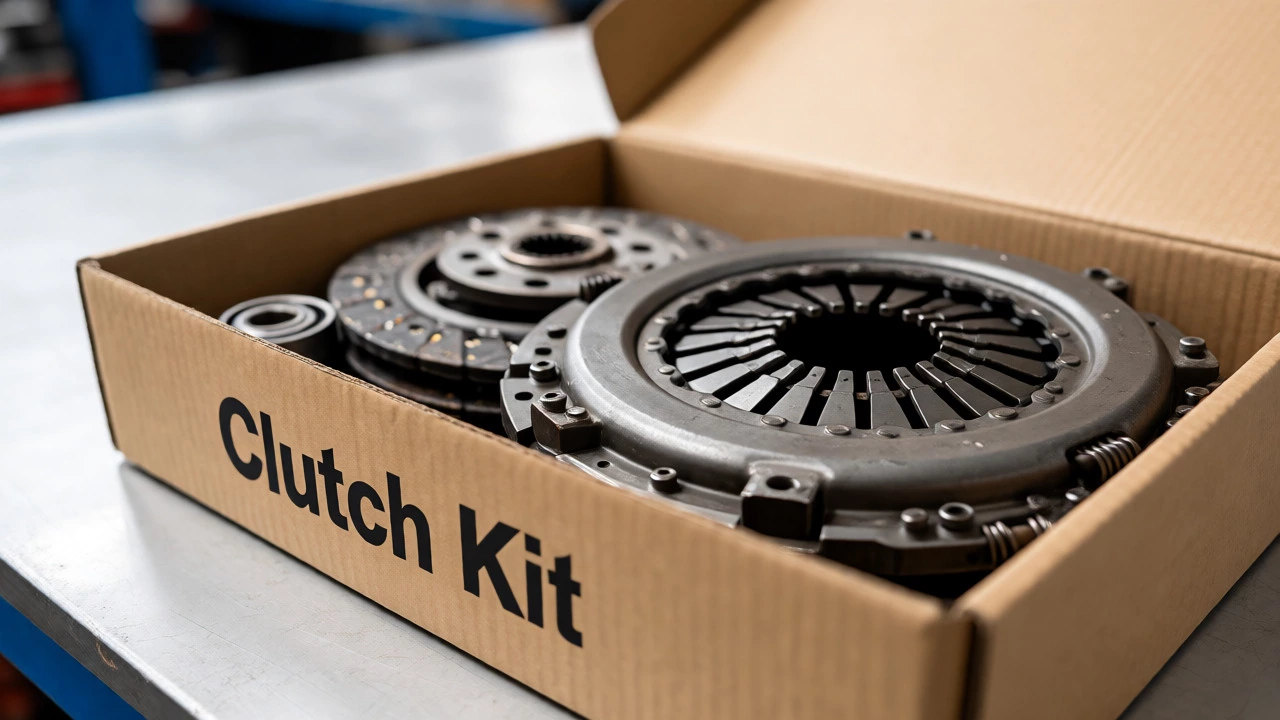
You’re staring at a cardboard box labeled "Clutch Kit," and it feels like you’ve bought a mystery puzzle. You know your car is slipping gears or the pedal feels weird, but what exactly are you supposed to install? It’s not just one part; it’s a team effort. If you buy the wrong combo, you’ll be back in the shop within six months. Let’s cut through the noise and look at what actually comes in that box, why each piece matters, and when you need more than just the basics.
The Core Trio: Disc, Plate, and Bearing
Most standard clutch kits contain three primary components: the clutch disc, the pressure plate, and the release bearing. These three work together to connect and disconnect the engine from the transmission. Think of them as a handshake between two powerful machines. If one hand is sweaty (the disc) or stiff (the plate), the grip fails.
The clutch disc is the friction material component that sits between the flywheel and the pressure plate. It has splines on the inside that slide onto the transmission input shaft. When you press the pedal, this disc stops spinning against the flywheel, cutting power. When you let go, it clamps down hard to transfer torque. Friction materials vary-organic compounds for smooth daily driving, ceramic for heavy towing, and sintered metal for racing applications.
The pressure plate is a heavy steel assembly bolted to the flywheel. It uses spring tension to clamp the clutch disc against the flywheel. When you press the clutch pedal, the release bearing pushes on the diaphragm spring fingers, releasing this pressure. Pressure plates wear out because they handle massive heat and rotational force. A worn plate won’t clamp tightly enough, causing slip.
The release bearing (also called a throw-out bearing) does the pushing. It rides on the transmission input shaft and presses against the pressure plate’s spring fingers. Because it spins while sliding, it’s prone to failure. A bad bearing whines or grinds when you touch the pedal. Always replace it with the kit-it’s cheap insurance against pulling the transmission again.
When You Need More Than the Basics
Not every job is a simple swap. Sometimes, the damage goes deeper. This is where "3-piece" vs. "4-piece" kits come into play. A 4-piece kit adds a pilot bearing or bushing. The pilot bearing supports the end of the crankshaft where it enters the transmission. If you hear a squeal when you press the clutch, the pilot bearing is likely dry or worn. Skipping it can cause alignment issues and premature wear on new parts.
For high-mileage vehicles or performance builds, you might see kits that include a flywheel. Technically, most kits don’t include the flywheel because it’s a separate, expensive machined part. However, some premium bundles do. Why care about the flywheel? It’s the mating surface for the clutch disc. If it’s scored, warped, or glazed, a new disc will chatter or slip immediately. Resurfacing an existing flywheel costs money and time; buying a new one included in a kit can sometimes be cheaper and guarantees a perfect match.
| Component | Standard Kit (3-Piece) | Performance/Heavy Duty | Complete Bundle |
|---|---|---|---|
| Clutch Disc | Organic Friction | Ceramic or Sintered Metal | High-Performance Organic |
| Pressure Plate | OEM Spec Spring Load | Higher Clamp Load (15-20% increase) | OEM Spec |
| Release Bearing | Included | Included (Often Heavy Duty) | Included |
| Pilot Bearing | Optional / Separate | Included | Included |
| Flywheel | Not Included | Not Included (Usually Machined) | Included (New Dual-Mass or Single) |
Alignment Tools and Hardware: The Hidden Essentials
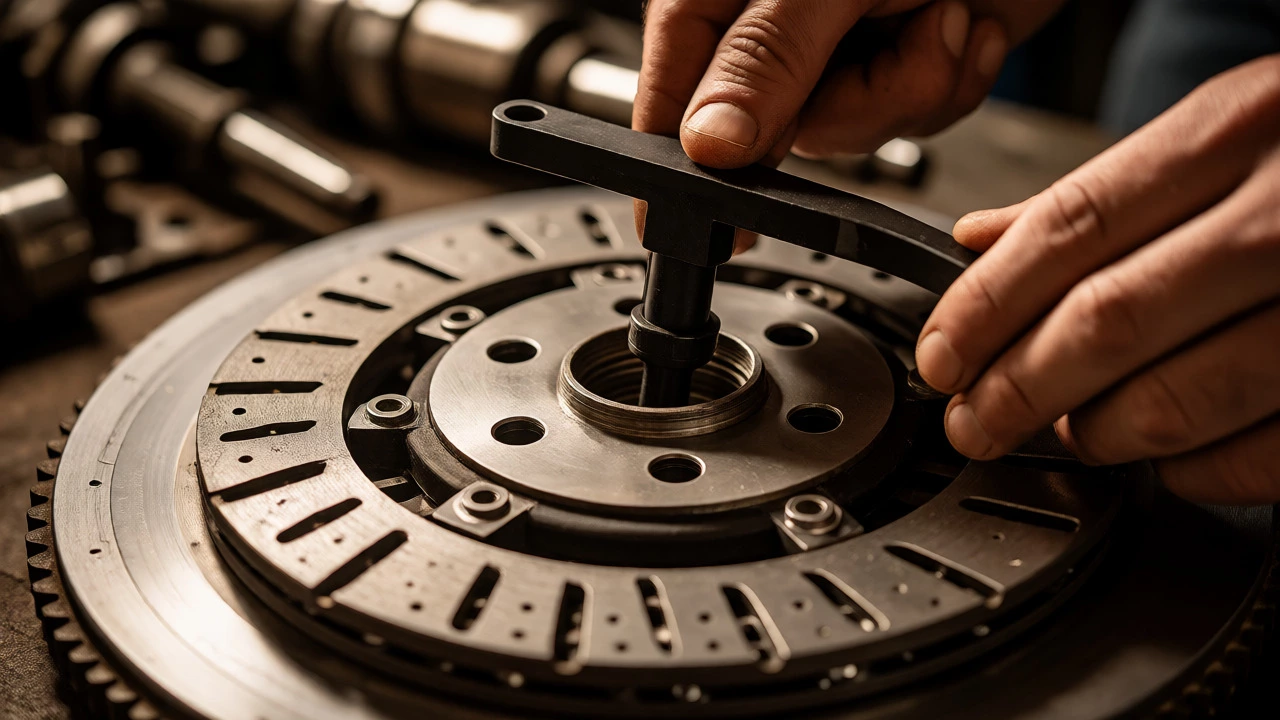
Have you ever tried to center a clutch disc without help? It’s frustrating. Many quality kits now include a plastic alignment tool. This simple T-shaped or rod-like device holds the clutch disc perfectly centered over the pilot bearing while you bolt up the pressure plate. Without it, you risk damaging the input shaft or having the transmission refuse to slide back in. Don’t toss this tool after installation; keep it in your toolbox. It saves hours if you ever have to redo the job.
Check the box for hardware. While many manufacturers reuse existing bolts, some kits provide new pressure plate bolts. This is crucial for high-torque applications where old bolts might stretch or corrode. Also, look for a small tube of grease. You need a tiny dab on the input shaft splines and the pilot bearing. Too much grease causes hydraulic contamination if it leaks into the slave cylinder area, so less is more.
Hydraulic Components: Master and Slave Cylinders
Here’s a common mistake: people change the clutch kit but ignore the hydraulics. If your master or slave cylinders are leaking or seized, the new clutch won’t disengage properly. Some advanced kits are marketed as "Hydraulic Clutch Kits." These include the master cylinder, slave cylinder, and lines. This is rare for basic replacements but common in European cars (like BMWs or VWs) where hydraulic failures are frequent.
If your current setup feels spongy or the pedal stays on the floor, check the hydraulics before ordering parts. Replacing the kit without fixing a leaky slave cylinder is like washing your hands with a broken faucet. You’ll still be dirty. For older Japanese trucks or American muscle cars, mechanical linkages are still used, so no hydraulics are needed-just lube and adjustment.
Dual-Mass Flywheels: A Special Case
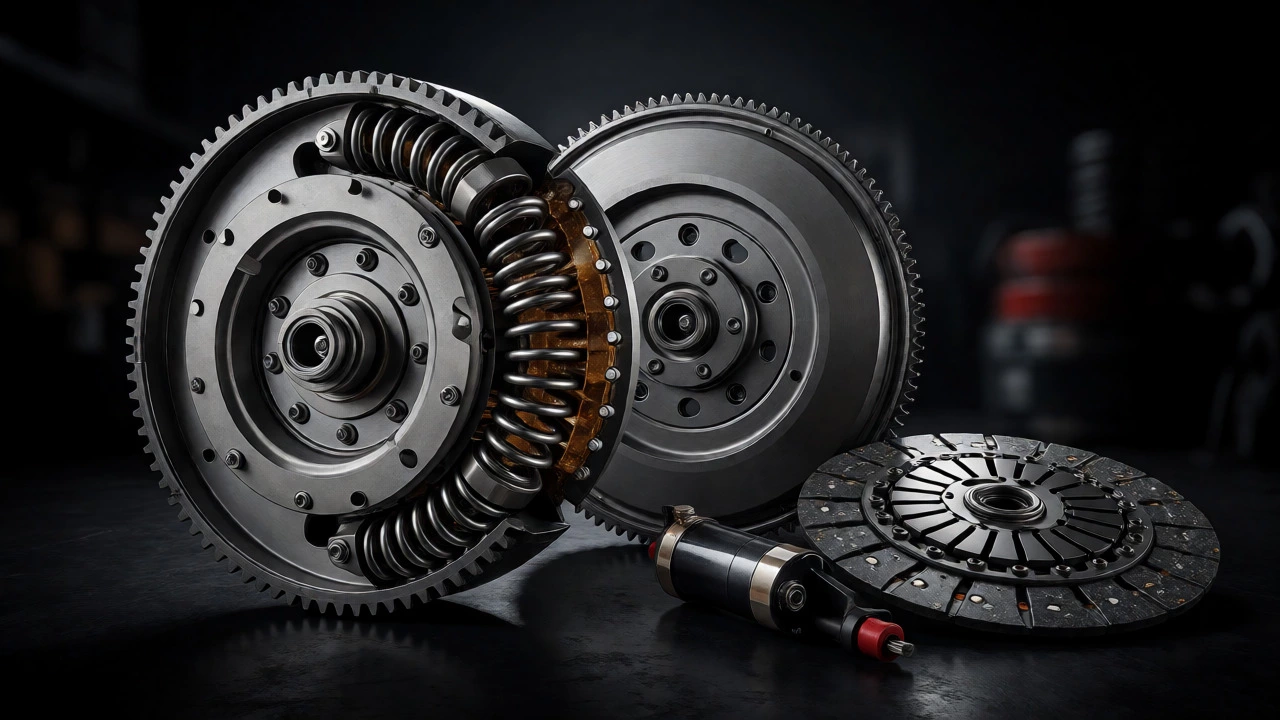
If you drive a modern diesel truck or a luxury sedan, you might have a dual-mass flywheel (DMF). Unlike a solid single-mass flywheel, a DMF has internal springs and dampers to reduce vibration. These fail differently. They don’t just warp; they rattle or knock when cold.
Kits for DMF applications are complex. They often require specific clutch discs designed to interact with the DMF’s torsional damper. You cannot always convert a DMF to a single-mass flywheel without changing the starter motor and possibly the transmission mount. If you’re replacing a DMF, ensure the kit specifies compatibility. Using a standard organic disc on a worn DMF leads to rapid failure. In these cases, buying a complete package including the new DMF is often the only reliable path.
How to Verify Your Kit Before Installation
Don’t assume the box contents match your needs until you open it. Here’s a quick checklist to avoid headaches:
- Match the Part Numbers: Compare the part numbers on the new disc and plate with your old ones. Manufacturers often update designs; slight differences in spline count or diameter matter.
- Inspect the Friction Surface: Run your finger across the disc. It should feel gritty but uniform. No oil stains, cracks, or delamination.
- Check the Release Bearing: Spin it by hand. It should rotate smoothly without grinding or rough spots. Listen for any clicking.
- Verify the Alignment Tool: Ensure it fits snugly into the hub splines and rests against the pilot bearing hole. If it’s loose, you’ll struggle during assembly.
- Look for Instructions: Good kits include torque specs and break-in procedures. Ignoring break-in (usually 500 miles of gentle use) glazes the friction material, killing grip.
Why Buying Cheap Can Cost You Twice
A $150 clutch kit versus a $300 one isn’t just brand marketing. The difference lies in material science. Cheap organic discs burn off quickly under heat, leading to fade on hills. Cheap pressure plates lose spring tension faster, causing slip earlier. And the cheapest release bearings often lack proper seals, letting dirt in and grease out.
In Australia, where we tow boats and climb steep grades, thermal management is critical. A higher-quality kit maintains consistent bite point and engagement strength longer. Labor is the biggest cost in clutch replacement. If you pay a mechanic $800-$1,200 to pull the transmission, saving $100 on parts isn’t worth risking another labor bill in six months. Buy once, cry once.
Does a clutch kit include the flywheel?
Typically, no. Most standard clutch kits consist of the disc, pressure plate, and release bearing. The flywheel is usually sold separately because it may only need resurfacing rather than replacement. However, some premium bundles do include a new flywheel, especially for dual-mass applications.
What is the purpose of the alignment tool in a clutch kit?
The alignment tool centers the clutch disc over the pilot bearing while you bolt the pressure plate to the flywheel. This ensures the transmission input shaft can slide into the disc’s splines without forcing or damaging components.
Should I replace the pilot bearing with my clutch kit?
Yes, absolutely. Even if your current pilot bearing seems fine, it’s inexpensive compared to the labor of removing the transmission again later. A failed pilot bearing can destroy a new clutch disc and make shifting difficult.
Can I mix brands in a clutch kit?
It’s generally not recommended. Clutch components are engineered to work together as a system. Mixing a disc from one brand with a pressure plate from another can lead to improper clamp load, uneven wear, or poor engagement characteristics.
How long does a clutch kit last?
A standard organic clutch kit typically lasts between 50,000 and 100,000 miles depending on driving habits. Aggressive driving, towing, or city traffic with frequent stop-and-go can significantly shorten its lifespan.