Air Filter Replacement Estimator
Enter your current mileage and select your driving conditions to get a personalized replacement schedule for both your engine and cabin air filters.
You probably check your oil level or tire pressure regularly, but when was the last time you looked at your air filter? Most drivers forget about this critical component until their engine starts struggling. Here’s the blunt truth: there is no single answer to "how often," because it depends entirely on where you live and how you drive. But if you wait for a warning light, you might already be losing fuel efficiency.
The Two Filters You Actually Need to Care About
Before we talk schedules, let’s clear up a common confusion. Your car has two main filters that trap dirt from the air, and they serve completely different purposes. Confusing them leads to wasted money or neglected health risks.
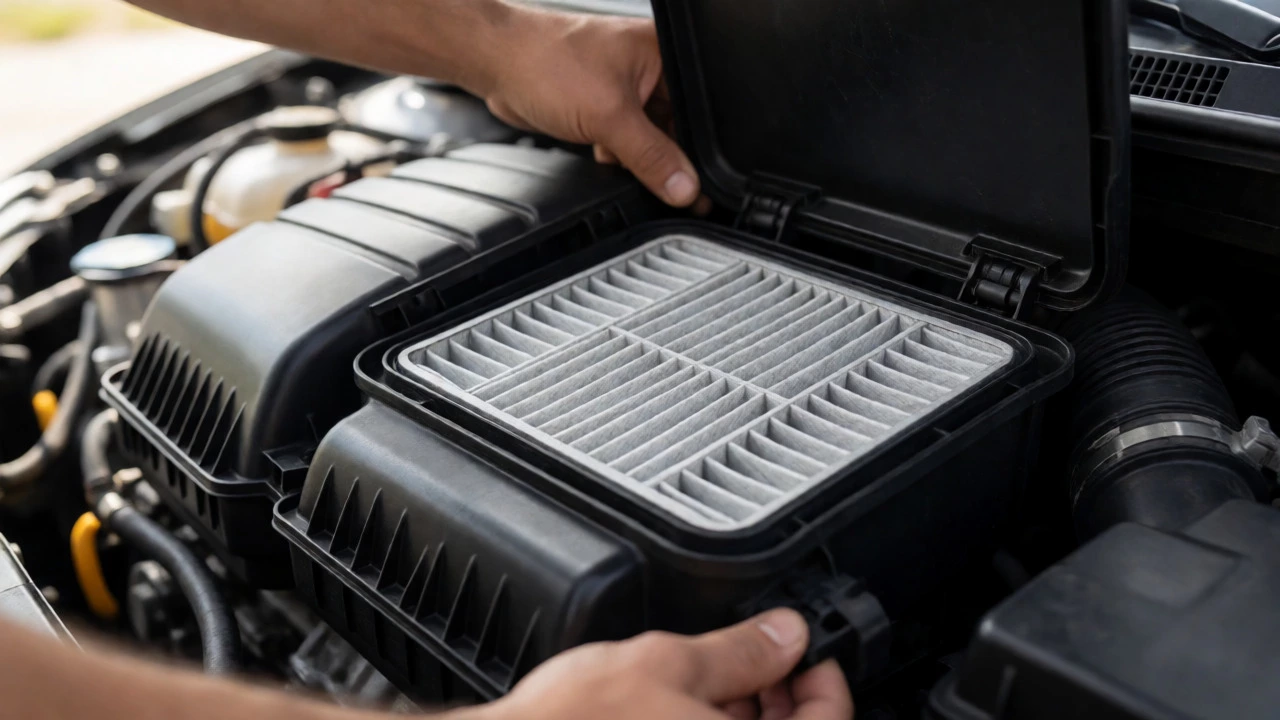
First, there is the engine air filter. This is the lung of your car. It sits in a black plastic box near the front of the engine bay and cleans the air before it enters the combustion chamber. If this gets clogged, your engine can’t breathe properly, leading to poor performance and reduced fuel economy.
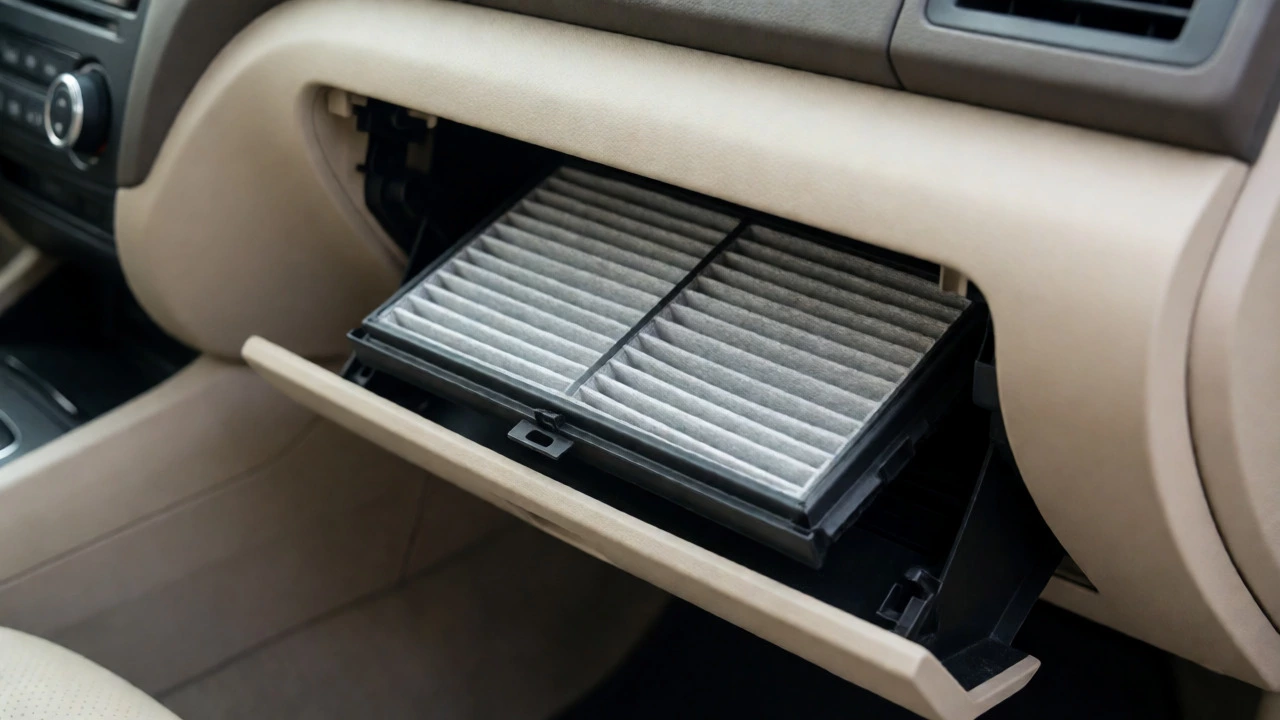
Second, there is the cabin air filter. This one protects you, not the engine. Located behind the glovebox or under the hood near the windshield, it filters the air blowing into your interior through the AC and heating vents. A dirty cabin filter means you’re breathing dust, pollen, and road grime every time you turn on the fan.
Most people only think about the engine filter when their mileage drops. But the cabin filter affects your comfort and health directly. If you sneeze more in the car than outside, that’s your clue.
General Replacement Intervals: The Baseline
Manufacturers usually provide a baseline recommendation in your owner’s manual. For most modern cars, the standard advice is to replace the engine air filter every 15,000 to 30,000 miles (approximately 24,000 to 48,000 kilometers). Some newer models with long-life filters claim they can go up to 50,000 miles, but treat that as an upper limit, not a rule.
Cabin air filters typically need changing more frequently-every 12,000 to 15,000 miles, or once a year. Why the difference? Cabin filters deal with finer particles like pollen and mold spores, which clog the pleats faster than the larger debris caught by engine filters.
| Filter Type | Location | Typical Interval | Main Risk if Ignored |
|---|---|---|---|
| Engine Air Filter | Engine Bay | 15k - 30k miles | Reduced power, poor MPG |
| Cabin Air Filter | Behind Glovebox | 12k - 15k miles | Bad odors, weak airflow |
These numbers are averages. If you drive a heavy-duty truck or a high-performance sports car, check the specific service schedule. Luxury brands like BMW or Mercedes often have stricter intervals due to tighter tolerances in their engines.
When to Ignore the Manual: Environmental Factors
Your driving environment matters more than your odometer. If you live in a city with heavy traffic, you’re exposed to constant brake dust and exhaust particulates. In rural areas, you might encounter agricultural dust, pollen storms, or construction sites. These conditions accelerate filter saturation significantly.
Consider these red flags that mean you should change the filter immediately, regardless of mileage:
- Dusty Roads: If you commute on unpaved roads daily, cut the recommended interval in half. That white dust kicking up behind other cars ends up in your filter.
- Pollen Season: If you suffer from allergies, replace the cabin filter before spring. It’s cheap insurance against sneezing fits while driving.
- Short Trips: Frequent short trips prevent the engine from reaching optimal temperature, causing condensation and mildew buildup in the intake system, which can degrade filter material.
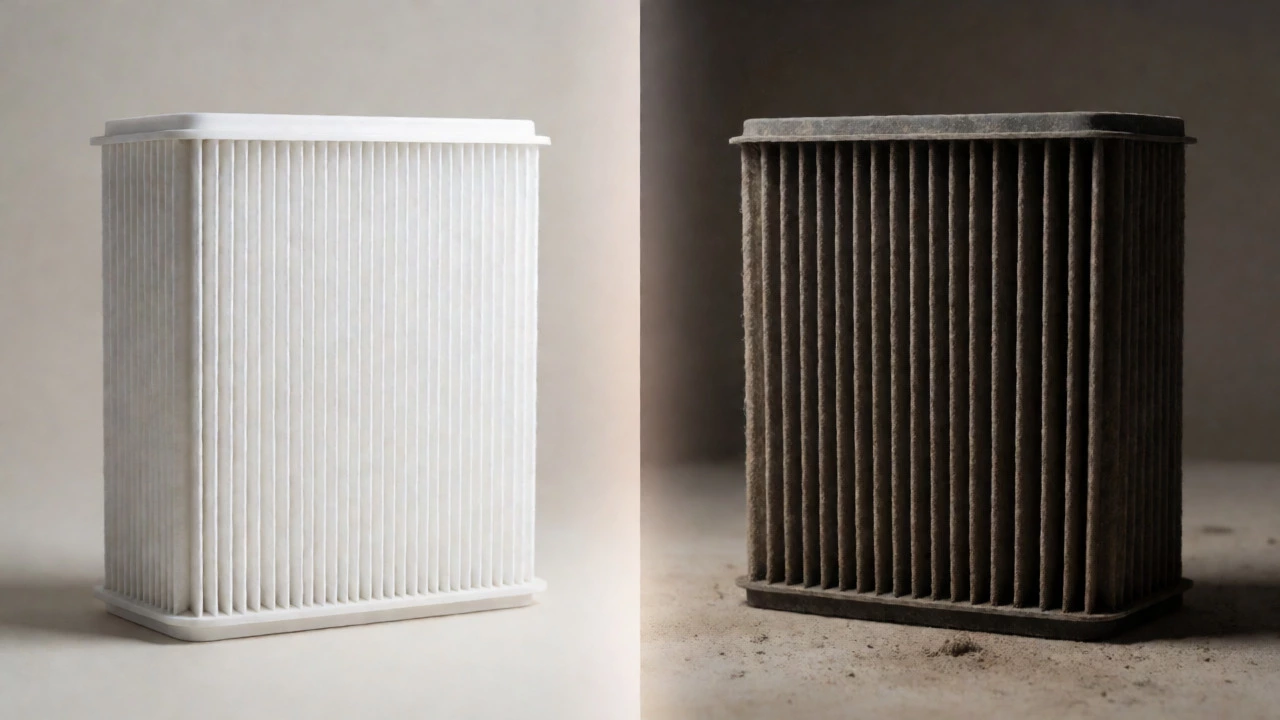
- Visible Debris: Open the filter housing. If you see leaves, insects, or thick gray fuzz, it’s done. Don’t tap it out; replace it.
A friend of mine drives a pickup truck on gravel roads for work. His manual said 30,000 miles. He changed his filter every 10,000 miles. After skipping it once and hitting 25,000 miles, he noticed a distinct hesitation during acceleration. The filter wasn’t just dirty; it was packed solid. Changing it restored his throttle response instantly.
Signs Your Engine Air Filter Is Clogged
You don’t always need a wrench to know something is wrong. Your car will tell you if the engine air filter is failing. Listen and look for these symptoms:
- Check Engine Light: Modern cars monitor airflow via the Mass Air Flow (MAF) sensor. A restricted filter causes abnormal readings, triggering the light. Before blaming expensive sensors, check the cheap filter first.
- Black Smoke from Exhaust: If the air-fuel mixture becomes too rich (too much fuel, not enough air), unburned fuel exits as black smoke. This is bad for your catalytic converter and your wallet.
- Unusual Engine Sounds: A clogged filter forces the engine to suck harder. You might hear a whistling noise or a rough idle at stoplights.
- Drop in Fuel Economy: A severely clogged filter can reduce gas mileage by up to 10%. If your tank lasts noticeably shorter distances, inspect the intake.
Don’t confuse these with spark plug issues. Spark plugs cause misfires and shaking; a dirty filter causes sluggishness and lack of power. They feel different. Sluggishness feels like trying to run through water.
Signs Your Cabin Air Filter Needs Replacing
The cabin filter fails quietly. You won’t get a check engine light. Instead, you’ll notice comfort issues:
- Weak Airflow: Turn the fan to max. If the air coming out is barely a breeze, the filter is likely blocked. This puts extra strain on the blower motor, which can eventually burn out-a $300 repair versus a $15 part.
- Musty Odors: A damp, old filter grows bacteria and mold. When you turn on the AC, you smell wet socks or vinegar. This isn’t just annoying; it’s unhealthy.
- Foggy Windows: The defroster relies on dry, clean air. A saturated cabin filter holds moisture, making windows fog up faster and stay fogged longer.
- Allergy Flare-ups: If you or your passengers sneeze more inside the car than outside, the filter isn’t trapping allergens anymore.
DIY vs. Professional Service: What’s Worth Paying For?
Changing an engine air filter is one of the easiest DIY tasks. It usually requires no tools or just a screwdriver. Pop the clips, swap the rectangular paper element, close the lid. Done in five minutes. Dealerships often charge $50-$80 for this job, including labor. Buying the part yourself costs $10-$20. The markup is huge for such simple work.
Cabin filters vary. On many sedans, accessing the glovebox compartment takes ten minutes. On some SUVs or luxury cars, you might need to remove trim panels or even the dashboard. If you’re handy, try it yourself. If the access point looks complicated, pay the mechanic. Labor rates for a difficult cabin filter swap can reach $100+, so weigh the effort against the cost.
Pro tip: Always buy quality parts. Cheap filters use thinner paper and less dense mesh. They might fit, but they don’t filter as well. Brands like Mann-Filter, Bosch, or Fram offer reliable performance. Avoid no-name brands sold in bulk bins if you care about engine longevity.
Can You Clean a Dirty Air Filter?
This is a controversial topic. Older cars used reusable foam or cotton gauze filters that could be washed and oiled. However, 95% of modern vehicles use disposable paper filters. Tapping a paper filter against a curb removes large debris but doesn’t restore microscopic pores. Vacuuming it helps slightly but rarely restores full airflow.
If you find a paper filter that looks lightly dusty, you can gently vacuum it. But if it’s gray or brown throughout, replace it. Cleaning a heavily soiled paper filter is false economy. You risk tearing the delicate media, allowing grit to enter your engine. Once grit gets past the rings, it scores cylinder walls, leading to permanent damage.
Can I drive with a dirty air filter?
Yes, for a short time. A dirty filter restricts airflow, reducing power and fuel efficiency, but it won’t immediately break the engine. However, prolonged use can allow debris to bypass the filter if the seal degrades, potentially damaging internal components. It’s safer and cheaper to replace it promptly.
Does a dirty cabin filter affect AC cooling?
Absolutely. The AC system needs sufficient airflow over the evaporator coil to transfer heat. A clogged cabin filter restricts this flow, causing the system to work harder and cool less effectively. You’ll feel weaker cold air output, especially on hot days.
How do I know which side of the air filter faces up?
Most filters have arrows indicating airflow direction. Usually, the smooth side faces the engine (downstream), and the ribbed or reinforced side faces the intake (upstream). Check the housing for molded arrows if the filter lacks markings. Installing it backward reduces efficiency and may trigger error codes.
Is it necessary to change the air filter every oil change?
Not necessarily. While mechanics often suggest it for convenience, engine air filters last longer than oil. Unless you drive in extreme dust, checking it every other oil change is sufficient. Inspect it visually; if it’s clean, leave it alone. Unnecessary replacements waste money and resources.
What happens if I never change my cabin air filter?
Over years, the filter becomes a breeding ground for mold and bacteria. Airflow decreases drastically, straining the blower motor. Eventually, the motor may fail, costing hundreds to replace. Additionally, occupants suffer from poor air quality, increased allergies, and persistent unpleasant odors.