Synthetic Oil Suitability Calculator
Determine if synthetic oil is the right choice for your vehicle based on mileage, age, and usage conditions.
You’ve probably heard the sales pitch at the service counter. "Synthetic is better. It lasts longer. It protects your engine." And mostly, they’re right. Synthetic motor oil is a lubricant engineered in a lab to provide superior performance compared to traditional petroleum-based oils. It handles extreme heat, resists breakdown, and flows better in freezing cold. But here’s the catch: it isn’t magic. In fact, for some specific vehicles and situations, switching to synthetic can actually cause more problems than it solves.
If you are driving an older car, living in a dusty environment, or dealing with a specific type of engine wear, that premium bottle on the shelf might be doing your engine harm. Let’s look at exactly when you should skip the synthetic upgrade and stick to what works.
The High-Mileage Trap: Why Synthetic Can Leak Older Engines
This is the most common reason people regret switching. If you have a vehicle with over 100,000 miles (or about 160,000 kilometers) on the odometer, synthetic oil can be risky. Here is why.
Conventional motor oil is lubricant refined from crude oil that contains natural impurities and heavier molecular structures. Over decades of use, these heavier molecules and accumulated carbon deposits settle inside your engine. They act like a gunk-filled sealant around old rubber seals, gaskets, and piston rings. Your engine runs fine because this sludge keeps everything tight.
Synthetic oil is clean. It is designed to dissolve varnish and carbon buildup. When you pour that pristine fluid into an old, sludgy engine, it starts cleaning house. As those deposits dissolve, the seals that were relying on them to stay compressed begin to shrink and harden. Suddenly, you have oil leaking from valve covers, rear main seals, or oil pans. What was a minor drip becomes a major puddle under your car.
If your car has high mileage and no current leaks, wait. Don’t switch just because you want the "best" oil. Keep using conventional or a specialized high-mileage blend until you see signs of trouble. Then, address the seals before changing the oil type.
Vehicles Designed for Conventional Oil Only
Not every engine was built to handle synthetic formulas. While modern cars almost universally require or recommend synthetic blends, older vehicles-particularly those manufactured before the mid-1990s-were engineered specifically for conventional petroleum oil.
In these older engines, tolerances between moving parts are looser. Conventional oil is slightly thicker and provides a cushion that fits these wider gaps. Synthetic oil is thinner and more uniform. In a tight-tolerance modern engine, this thinness allows for faster startup and less friction. In an old engine, it might not provide enough film strength to protect worn bearings during cold starts.
Check your owner’s manual. If it says "SAE 30" or "10W-40 Conventional," stick to it. Forcing synthetic into an engine not designed for it can lead to increased noise, higher operating temperatures, and premature wear on components that expect the viscosity profile of traditional oil.
The Diesel Engine Dilemma: Two-Stroke vs. Four-Stroke
If you own a small diesel engine, like one found in a chainsaw, generator, or lawn mower, synthetic oil is often a bad idea. Specifically, we are talking about two-stroke diesel engines.
Two-stroke engines burn oil along with fuel. They require oil that vaporizes cleanly and leaves minimal ash residue. Many standard synthetic oils contain additives designed for four-stroke automotive engines that do not burn off completely in a two-stroke system. This leads to excessive carbon buildup on pistons and valves, causing overheating and seizure.
Even for larger four-stroke diesel trucks, caution is needed. Heavy-duty diesels produce significant soot. Some synthetic formulations struggle to suspend this soot effectively without specialized detergents. Always look for API CK-4 or FA-4 ratings if you are using synthetic in a diesel. If the manufacturer specifies conventional mineral oil, respect that choice. The cost savings aren't worth the risk of injector clogging or turbocharger failure.

Extreme Dirt and Dust Environments
Where you drive matters as much as how you drive. If you operate vehicles in extremely dusty conditions-think off-road racing, agricultural work in dry climates, or construction sites with poor filtration-synthetic oil can sometimes be a disadvantage due to its cleanliness.
Wait, isn’t cleanliness good? Usually, yes. But in ultra-dusty environments, air filters fail. Fine silica dust enters the crankcase. Conventional oil tends to trap abrasive particles in its thicker base stock, keeping them suspended away from critical metal surfaces until the next oil change. Synthetic oil’s superior dispersancy means it keeps particles smaller and more mobile. In a perfectly sealed system, this is great. In a leaky filter scenario, those tiny, sharp silica particles can circulate freely and act like sandpaper on camshafts and bearings.
If you cannot guarantee perfect air filtration, conventional oil offers a margin of safety by trapping grit more aggressively. Change the oil more frequently, but don’t assume synthetic will save you from a blown air filter.
Cost-Benefit Analysis: Is It Worth It?
Synthetic oil costs significantly more than conventional oil. Depending on the brand and region, you might pay 50% to 100% more per quart. For a daily commuter driving short distances in mild weather, does that extra protection matter?
Probably not. If you drive a reliable sedan, change your oil every 5,000 miles, and live in a climate that stays between 40°F and 80°F (4°C to 27°C), conventional oil performs adequately. The marginal gain in engine life from synthetic is negligible compared to the cost difference. Save your money for tires or brakes instead.
However, if you tow heavy loads, race your car, or live in extreme temperatures, synthetic pays for itself through extended drain intervals and reduced engine stress. Calculate your annual mileage and oil change frequency. If you only change oil twice a year, the $20 savings on conventional oil doesn’t justify the potential risk of engine wear under stress.
| Scenario | Risk Factor | Recommended Alternative |
|---|---|---|
| High Mileage (>100k mi) | Dissolves sealing sludge, causing leaks | Conventional or High-Mileage Blend |
| Pre-1990 Vehicles | Tolerances too loose for thin synthetic flow | Manufacturer-specified Conventional |
| Two-Stroke Diesels | Additives cause carbon buildup | Specialized Two-Stroke Oil |
| Poor Air Filtration | Disperses abrasive dust particles | Conventional with frequent changes |
| Budget Constraints | High cost for marginal benefit | Quality Conventional Oil |
Synthetic Blends: The Middle Ground
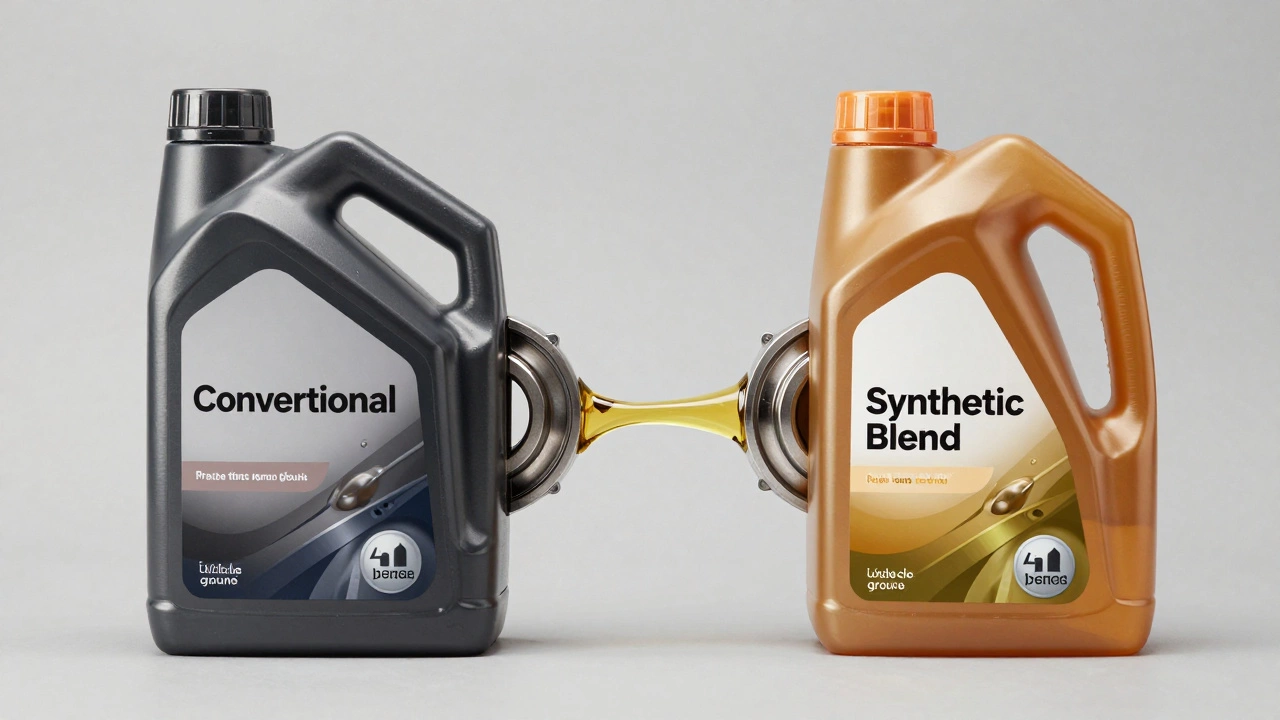
If you are unsure whether to go full synthetic or stay conventional, consider a synthetic blend. These oils mix roughly 20% to 50% synthetic base stocks with conventional oil. They offer better cold-start protection and oxidation resistance than pure conventional oil, without the aggressive cleaning power that triggers leaks in high-mileage engines.
Blends are ideal for moderate-use vehicles that occasionally face harsh conditions. They provide a buffer zone. If you have a 70,000-mile SUV that you take camping in winter, a blend gives you the low-temperature flow of synthetic without risking the seals like a full synthetic might.
Myth Busting: Synthetic Doesn’t "Burn Off" Faster
A persistent myth among older mechanics is that synthetic oil burns off faster or causes smoking in older engines. This is largely false. Synthetic oil has higher flash points and better thermal stability. It does not evaporate easily.
If your engine is burning oil, the problem is mechanical: worn piston rings, valve stem seals, or PCV valve issues. Switching to synthetic won’t fix a mechanical leak, nor will it cause one directly. However, as mentioned earlier, it can reveal existing weak seals by cleaning the gunk holding them in place. Don’t confuse correlation with causation. The oil didn’t break the seal; the seal was already failing.
Final Checklist Before You Buy
Before you hand over your credit card for that premium bottle, run through this quick mental checklist:
- Mileage Check: Is my odometer past 100,000 miles? If yes, check for leaks first.
- Manual Review: Does my owner’s manual explicitly forbid synthetic? Rare, but possible for very old models.
- Engine Type: Am I using a two-stroke engine or a specialized industrial motor?
- Environment: Do I drive in extreme dust with questionable air filters?
- Budget: Will the extra cost impact my ability to maintain other critical systems?
If you answered "yes" to any of these, hold off on the synthetic. Stick to conventional or a blend. Your engine will thank you, and so will your wallet.
Can I switch from conventional to synthetic oil halfway through an oil change interval?
Yes, you can switch at any time. Just make sure the new synthetic oil meets the same viscosity grade (e.g., 5W-30) as your previous oil. Mixing them temporarily is safe, but try to complete the transition with a full drain and fill to get the maximum benefits of the synthetic formula.
Does synthetic oil void my car warranty?
No. Under laws like the Magnuson-Moss Warranty Act in the US, manufacturers cannot void warranties simply because you used synthetic oil, provided it meets the specified API standards and viscosity requirements listed in your owner’s manual. In fact, many modern warranties now require synthetic oil.
Is synthetic oil better for cold weather?
Absolutely. Synthetic oil flows much better at low temperatures than conventional oil. This reduces engine wear during cold starts, which is when most engine damage occurs. If you live in Adelaide winters or colder climates, synthetic is highly recommended unless you have the high-mileage leak issue.
How long does synthetic oil last compared to conventional?
Synthetic oil typically lasts twice as long as conventional oil. While conventional oil may degrade after 5,000 miles or 6 months, synthetic can often go 7,500 to 10,000 miles or up to a year. However, always follow your vehicle manufacturer’s recommended service intervals, as severe driving conditions may require more frequent changes.
What should I do if my high-mileage car starts leaking after switching to synthetic?
Switch back to conventional oil immediately to stop the cleaning action. Then, have a mechanic inspect the seals and gaskets. You may need to replace the valve cover gasket or rear main seal. Once the seals are replaced, you can safely return to synthetic oil if desired, as the new seals will not rely on sludge to hold their shape.